Sunday, December 04, 2005

Wednesday, November 30, 2005

A Christmas Pledge

We got this pledge from our uber-liberal catholic church (which, by the way, is currently undergoing an audit by our archdioses and will probably get run out of town).

The Pledge
1. I will examine my motives for celebrating Christmas.
2. I will not spend money to impress others.
3. I will avoid doing anything to oblige others to spend on me.
4. I will not engage in excess of eating, drinking, partying or anything that will reduce the freedom of myself or others.
5. I will give gifts and do activities only if they enhance life-for myself and others.
6. I will avoid gifts that are gadgets, made by complicated, energy-consuming processes that excessively pollute the environment.
7. I will choose gifts that rely on the involvement, energy and ingenuity of the recipient.
8. I will avoid buying items made by exploited workers whose land and labor are sacrificed to tempt my consumer appetites.
9. I will question the source of consumer goods before I buy.
10. I will celebrate Christmas by sharing of myself more than of my property.
11. I will give gifts of service which involve my time, my work, my spoken and written word, my art, my song, my presence-and other things that are not objects-whenever possible.
12. I will use some of my time to visit family, friends and those who have less, hurt more or who have been forgotten.
13. I will choose gifts that involve me and/or the recipient their creation and use.

The Peak of Procrastination

I must be stressing out.

I have an incredibly large workload at the moment, mainly because I am trying to get everything done before Itsy's arrival (we'll call that "time zero") and so, I find myself procrastinating to a degree that I have not reached since working on my dissertation.

What am I doing you ask?

Well, reading Dooce, for one. But, specifically, she has a great post on Sesame Street's character Count Von Count. In particular, her post on the subject focuses on his many lovers (being a vampire, he is, notably, 1,832,652 years old). His current squeeze is called "Sachertorte" and, in honor of that, I'm thinking of renaming BioMom here.

Okay, I probably won't do that, but I'm definitely renaming that little cat of ours for The Count's: "Fatatatita"!

Here Comes Itsy, Here Comes Itsy, Right Down Itsy Lane


Itsy must be coming soon. The other day I found BioMom going through the FYO's markers and checking each individual marker to see if they were still working. My attempts at explaining the economic concept of opportunity cost to her went unheard (or, more likely, were ignored).

Scene: BioMom sitting in a completely cluttered room after tearing apart a closet full of "craft supplies" and "christmas presents" testing markers and throwing them away one by one.

Me: What are you doing?

BioMom: Testing these markers.

Me in my head: Doesn't this woman, a lawyer, bill like $10,000 per hour at her firm? Does she think that testing markers is worth her time??? And look at this room! It is completely torn apart!

Me: Um. Why don't you just throw them all away? It is a waste of your time and we can get new ones for, like, ONE dollar at IKEA.

She is obviously nesting. This puts into perspective my doubts on the significance of our primal, biological origins.

Monday, November 28, 2005

Winter Wonderland


My English Homework

So, for tomorrow, we were supposed to take a poem (in my case, from Billy Collins) and imitate it, producing something similar, but our own.

Here's my try at poetry. First is the Billy Collins original called "Litany" and then my version follows.

Litany
-Billy Collins

You are the bread and the knife,
The crystal goblet and the wine...
-Jacques Crickillon


You are the bread and the knife,
the crystal goblet and the wine.
You are the dew on the morning grass
and the burning wheel of the sun.
You are the white apron of the baker,
and the marsh birds suddenly in flight.

However, you are not the wind in the orchard,
the plums on the counter,
or the house of cards.
And you are certainly not the pine-scented air.
There is just no way that you are the pine-scented air.

It is possible that you are the fish under the bridge,
maybe even the pigeon on the general's head,
but you are not even close
to being the field of cornflowers at dusk.

And a quick look in the mirror will show
that you are neither the boots in the corner
nor the boat asleep in its boathouse.

It might interest you to know,
speaking of the plentiful imagery of the world,
that I am the sound of rain on the roof.

I also happen to be the shooting star,
the evening paper blowing down an alley
and the basket of chestnuts on the kitchen table.

I am also the moon in the trees
and the blind woman's tea cup.
But don't worry, I'm not the bread and the knife.
You are still the bread and the knife.
You will always be the bread and the knife,
not to mention the crystal goblet and--somehow--the wine.


A Litany for My Pregnant Girlfriend in Her 9th Month
Inspired by "Litany" by Billy Collins

You are the rubber band around the Sunday paper,
the watermelon in August.
You are the present under the tree on Christmas Eve,
and the gossip with the juicy secret.
You are the pizza delivery guy stuck in traffic.

However, you are not the neighbor's fallen leaves that collect in our driveway,
or the stack of ungraded papers that crowd my desk.
And you are certainly not the toothpaste's minty blast in my mouth.
There is just no way that you are that minty blast.

You are sometimes that piece of corn stuck in my teeth
maybe even the music in the elevator.
But you are usually the black and white snap-shot of the reunited 1940s couple,
or the way that the five-year-old tells strangers about her day.

You are not even close to the Aurora Borealis,
and even a cursory observation of how you now move, will show that you are not,
at least not currently, the worn 300-count cotton sheets,
or the gentle May wind in the lavender iris' petals.

And a quick look in the mirror will show that you are neither
the grove of naked birches standing in their snow bath
or the steaming mug of coffee with my morning toast.

You are also not the green eggs and ham.
But, even if you were,
I would not be the antagonistic Sam,
continually refusing your emerald gestures with silly rhymes and caveats.

Friday, November 25, 2005

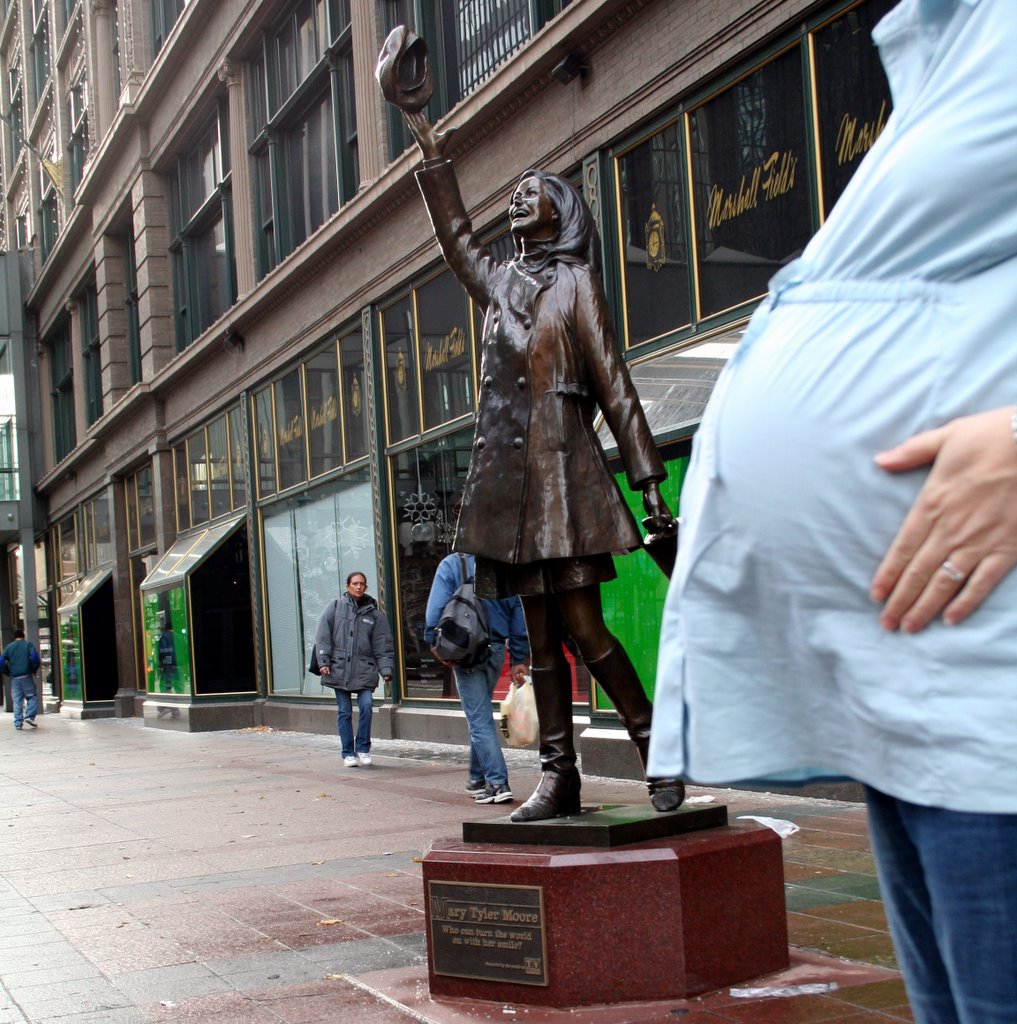
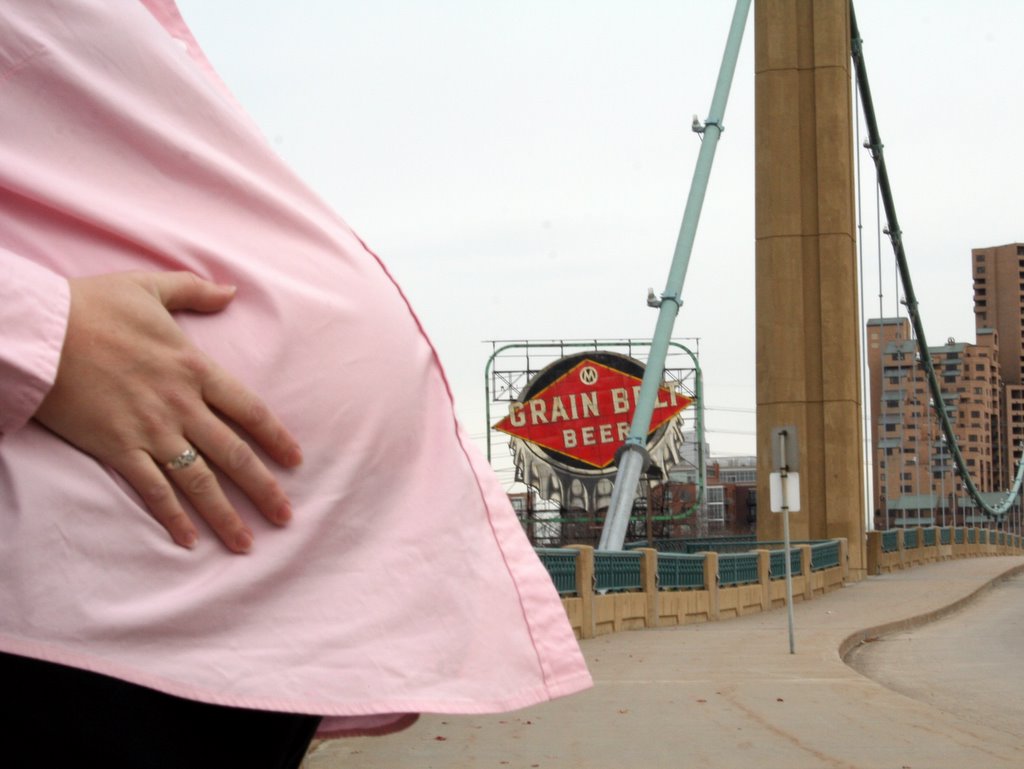
Spoonbridge and Belly

Alladin!


This afternoon, in an attempt to give some special attention to the FYO prior to Itsy's arrival, we went out "on a date."

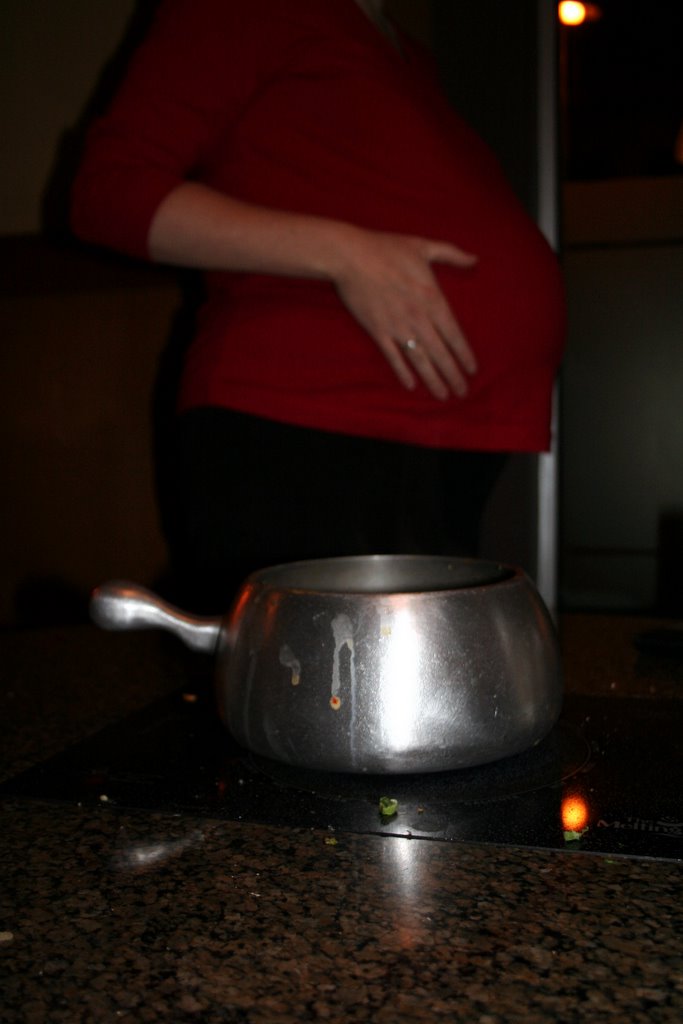
We saw the play Alladin and then went to The Melting Pot.

It was magical.

The play was just amazing. I dunno why. The cast must have had some great connection, because they were just incredible. Plus, there was a number in the first act that involved tap dancing. Seriously. That song "You've never had a friend like me" involved a tap dance!

Anyway, at one point, Alladin and Princess Jasmine exited the stage and then entered along the aisle and walked down among the audience. Some kid right behind us yelled out "ALLADIN!" as if he were talking to him. As if to say "Hey Alladin, I'm over here! What are you doing?" Hilarious.

Then, when, in the end Jasmine said that she chose Alladin as her groom, the FYO literally rose up her arm and yelled "YEAH!"

Priceless.

Thursday, November 24, 2005

Wednesday, November 23, 2005

To VBAC Or Not To VBAC

See the following article from the Washington Post, "Once a C-Section, Always a C-Section?"

Note To Self: You Never Really Were In Control Anyway

Conversation from this morning:

Me: Okay! You need to get dressed! Go and pick out what you want to wear!

FYO (after coercing her up to her room and convincing her that she is able to dress herself): I want to wear this read shirt with this pink sweater!

She pulls out a red shirt with buttons and a collar and a slightly heavier pink shirt without a collar but also with buttons. Not a sweater. Then she pulls out a cream and black plaid wool skirt. It is about 50 degrees here today and I had planned on taking her to the climbing wall since we're both off from school.

Me: Well, instead, how about you wear this white t-shirt underneath the pink "sweater" and some pink stretchy pants since we'll be climbing?

FYO: NO!!! I WANNA WEAR THE RED SHIRT!

Me: But the red and the pink. . . Well, they don't really match.

My agenda rears its ugly head and she completely recognizes it.

FYO: I DON'T CARE IF IT DOESN'T MATCH!!!

Me: Okay, I don't really care. Wear whatever you want, but please, just get dressed, okay?

FYO: Okay, I'll wear a white t-shirt but I don't want to wear THIS one because it has "HalLoween" written on it.

Me: But with the "sweater" on, you won't even SEE the "Halloween."

FYO: IT'S NOT EVEN HALLOWEEN ANYMORE!!! I want a different t-shirt!

Me: But we don't have any more plain white t-shirts.

I go back to the drawing board and pull out some other white shirts with other sweater combinations for her.

In the mean time, the FYO decides she's completely okay with it all.

FYO: You know, it doesn't matter what you look like on the OUTSIDE. Just what you look like on the INSIDE!

I resisted saying -- but I don't have to LOOK at your insides all day long. !

Monday, November 21, 2005

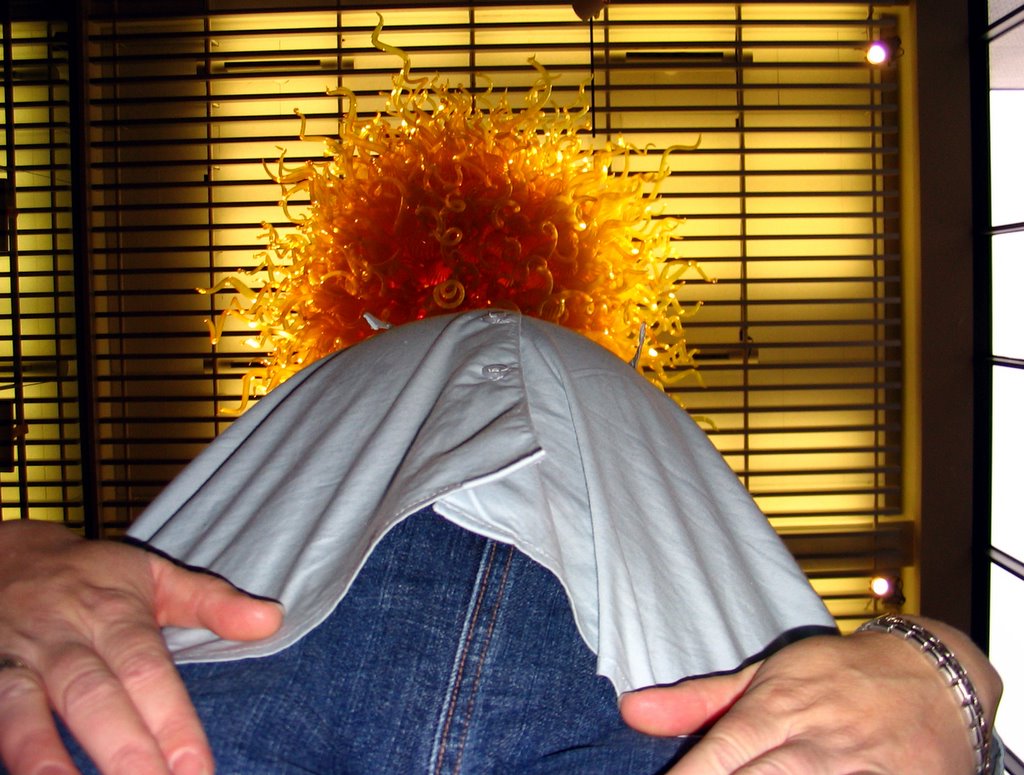
Itsy, Meet Chihuly


Discrete Changes In One's Lifetime

To the extent that we experience discrete moments in our life that result in changes (large and small) this is one of those for me:

[Blogauthor's first name],

Congratulations. The PRT committee just met and voted unanimously for renewal, which in this case means tenure. I am required to notify you within 7 days of our vote so I have attached the notification letter. The letter that goes to the dean is not due until December 9. You will get a copy of that letter when it is transmitted to the dean.

[PRT Committee Chair]

Sunday, November 20, 2005

Itsy On Board

The Economics of Donor Insemination

Today's New York Times sported the article "Hello, I'm Your Sister. Our Father is Donor 150."

It is another installation in the larger discussion about how children created through donor insemination (DI) are dealing with their personal realities. Ryan Kramer, the donor-conceived son of Wendy Kramer, founded the Website www.donorsiblingregistry.com. Here, more than 5,000 people have joined with the hopes of getting in touch with their anonymous donor.

Many registry members, however, are happy to "settle for contacting their half-siblings, who actually want to be found. As they do, they are building a new definition of family that both rests on biology and transcends it."

While many donor-conceived children prefer to call their genetic father their 'donor,' to differentiate the biological funciton of fatherhood from the social one, they often feel no need to distance themselves, linguistically or emotionally, from their siblings.

DI children seem to find comfort in meeting their half-siblings. In part it may be due to the relatively scant information they have about their donor and, therefore, their physical/medical history; one-half of the "nature" part of that nature/nurture equation.

For one DI daughter, knowing one of her half-siblings has "eased her frutration of knowing only the scant information about her biological father contained in the sperm bank profile."

According to "Sperm bank officials" (Now THAT would be a title to which to aspire: "I'm an accountant down at Wells Fargo. What do you do?" "Oh, I'm in banking too! I'm a Sperm bank official.") about 30,000 kids are born to donors every year. The industry, however, is largly unregulated and so banks do not have a clear idea how many children are born to each donor and where they (kids? donors?) are.

This could cause a pesky regression in our little eugenics experiment: the potential of unwitting incest.

Theoretically, sperm banks monitor the number of children produced from each donor and their location, limiting the sample availability based on statistical sampling on a regional basis. Of course, that is all in theory, with the problem increasing with the degree of unregulated markets (not to mention labor mobility!).

Interestingly, it is the DI Kids that are calling for more regulatio on this front:

Even as the Internet is making it easier for donor-conceived children to find one another, some are calling for an end to the system of anonymity under which they were born. Sperm banks, they say, should be required to accept only donors who agree that their children can contact them when they turn 18, as is now mandated in some Eurpean countries.

Enter economic man. Presumably there are a host of reasons why anyone would donate sperm. Possibly, (as the WashingtonPost article from last June implied), it is to help infertile (or lesbian) couples conceive. Economics would argue that it ss the bottom line that matters: money, predicting that it would mainly be donated by younger, relatively poorer men whose economic alternatives are smaller. As it stands, sperm banks typically pay men $50 to $100 per sample (customers pay about $150 to $600 per vial plus shipping). So, donors, economic theory predicts, are those men whose opportunity cost of their time (15 minutes?) is less than or equal to that $50-$100 range.

Most banks charge more for "professional" donors (those with a higher degree), but it is not clear as to whether the donors get more per donation (or whether it translates into higher "productivity", i.e. pregnancies or even smarter kids for that matter).

Donors probably aren't donating with the thought of future emails from their heretofore unknown spawn 18 years later. It would be expected that relaxing the anonymity option for donors would increase their marginal costs (future discounted marginal costs?) and therefore cause a decline in donations.

More recently sperm banks have begun to charge more for the sperm from donors who agree to be contacted by their offspring when they turn 18. But they say far fewer men would choose to donoate if they were requrie to release their identity.

And you thought you'd never think about supply and demand again after college.

Saturday, November 19, 2005

Friday, November 18, 2005

Thursday, November 17, 2005

And The Countdown Begins

At the end of this week, you're going to reach an important pregnancy milestone: Your baby will be considered full term! That means you could give birth very soon. Put any unnecessary travel plans on hold now in case you go into labor early. Many airlines won't let pregnant women fly close to their due dates for this reason. It's also time to start wrapping up projects at work, get an infant car seat if you haven't already done so (you won't be allowed to leave the hospital without one), and put finishing touches on the nursery. Your baby - who now weighs about 6 pounds and is almost 19 inches long - will continue to gain about an ounce a day until he makes his debut.

Tuesday, November 15, 2005

Girl Money

I finally got around to reading Maureen Dowd's teaser "What's a Modern Girl To Do" for her new book.

Having come of age (and come out) at the tail-end of the second wave of the US Feminist movement, I can recognize some of the patterns she presents in her non-pithy, mainly anecdotal, New York Times Magazine splash. Basically she argues that current (young) women find little use for the "tedious" feminists of yore and their antiquated policy goals.

Women in their 20's think old-school feminists looked for equality in all the wrong places, that instead of fighting battles about whether women should pay for dinner or wear padded bras they should have focused only on big economic issues.

Now, instead of "equal pay for equal work", there's talk about "girl money."

A friend of mine in her 30's says it is a term she hears bandied about the New York dating scene. She also notes a shift in the type of gifts given at wedding showers around town, a reversion to 50's-style offerings: soup ladles and those frilly little aprons from Anthropologie and vintage stores are being unwrapped along with see-through nighties and push-up bras.

"What I find most disturbing about the 1950's-ification and retrogression of women's lives is that it has seeped into the corporate and social culture, where it can do real damage," she complains. "Otherwise intelligent men, who know women still earn less than men as a rule, say things like: 'I'll get the check. You only have girl money.'"


Dowd claims that success and family/kid are incompatible for women. Citing no legitimate academic studies, she presents evidence that sucessful women of a certain age forwent marriage and family for career.

Furthermore in relation to my recent post about name changes, She cites evidence (credible at that) of a decline in the number of women who keep their own name upon marriage:

A Harvard economics professor, Claudia Goldin, did a study last year that found that 44 percent of women in the Harvard class of 1980 who married within 10 years of graduation kept their birth names, while in the class of '90 it was down to 32 percent. In 1990, 23 percent of college-educated women kept their own names after marriage, while a decade later the number had fallen to 17 percent.
Time magazine reported that an informal poll in the spring of 2005 by the Knot, a wedding Web site, showed similar results: 81 percent of respondents took their spouse's last name, an increase from 71 percent in 2000. The number of women with hyphenated surnames fell from 21 percent to 8 percent.

"It's a return to romance, a desire to make marriage work," Goldin told one interviewer, adding that young women might feel that by keeping their own names they were aligning themselves with tedious old-fashioned feminists, and this might be a turnoff to them.

The professor, who married in 1979 and kept her name, undertook the study after her niece, a lawyer, changed hers. "She felt that her generation of women didn't have to do the same things mine did, because of what we had already achieved," Goldin told Time.


In the end, although she seems to side with these Carrie Bradshaw types (although, the comparison to me was odd. Didn't Sarah Jessica Parker lose her Gap contract for being "too old"? How can Dowd lump her character in with the 20 somethings carrying the new anti-feminist torch she's describing?), she doesn't endorse it unconditionally. She wonders about the future:

Having boomeranged once, will women do it again in a couple of decades? If we flash forward to 2030, will we see all those young women who thought trying to Have It All was a pointless slog, now middle-aged and stranded in suburbia, popping Ativan, struggling with rebellious teenagers, deserted by husbands for younger babes, unable to get back into a work force they never tried to be part of?
It's easy to picture a surreally familiar scene when women realize they bought into a raw deal and old trap. With no power or money or independence, they'll be mere domestic robots, lasering their legs and waxing their floors -- or vice versa -- and desperately seeking a new Betty Friedan.


Katha Pollitt's response is predictably articulate and smart:

Maureen Dowd doesn't read my column. I know this because in her new book, Are Men Necessary?, she uncritically cites virtually every fear-mongering, backlash-promoting study, survey, article and book I've debunked in this space. She falls for that 1986 Harvard-Yale study comparing women's chances of marrying after 40 to the likelihood of being killed by a terrorist, and for the half-baked theories of Sylvia Ann Hewlett (ambitious women stay single or childless), Lisa Belkin (mothers give up their careers), Louise Story (even undergraduates understand this now) and other purveyors of the view that achievement and romance/family are incompatible for women. To be fair, Dowd apparently doesn't read Susan Faludi or Susan Douglas either, or The American Prospect, Slate, Salon or even The New Republic, home of her friend Leon Wieseltier, much thanked for editorial help in her introduction--all of which have published persuasive critiques of these and other contributions to backlash lit. Still, it hurts. I read her, after all. We all do.

She admits that some of Dowd's unscientific presentation is, in fact, true:

And it's hard to deny that there's a reality out there of which she gives a slapdash, cartoon, Style-section version. There is some truth to Dowd's horrified depiction of the hypersexualized culture of "hotness."

Just that its not the whole story.

By many measures young women today are far more independent than we were--more likely to finish college and have advanced degrees, to work in formerly all-male occupations, to have (or acknowledge having) lesbian sex, to refuse to suffer in silence rape, harassment, abuse. If we're going by anecdotal evidence from our circles of friends, I know young women who've made the finals in the Intel science contest and worked on newspapers in Africa, who've had sperm-bank babies alone or with other women, who play rugby, make movies, write feminist/political/literary blogs, organize unions, raise money for poor women's abortions.

And

I'm amazed, actually, that feminism is still around, given the press it gets.

While Dowd might be a hot fifty-something, Pollitt rocks.

Monday, November 14, 2005

Sunday, November 13, 2005

Friday, November 11, 2005

Unexpected Origins

A week or so ago, Taggert over at A Random Walk discussed the ironic origins of the minimum wage bill.

Here's a quote from the article he references:

Progressives, including Richard Ely, Louis Brandeis, Felix Frankfurter, the Webbs in England etc., were interested not in protecting women but in protecting men and the race. Their goal was to get women back into the home, where they belonged, instead of abandoning their eugenic duties and competing with men for work.

As it turns out, so-called Family Friendly policies seem to be following a somewhat similar pattern. I just re-read The Baby Boon by Burkett. In it, she points out one of the ironies of current Corporate work-life or family-friendly policies. In the mid-1900s, feminists decryed what was known as the "family wage". This was essentially a justification for paying men with wives and children higher wages not based on merit, but but on perceived need. It worked to the disfavor of working women, most of whom were single at that time. It also disadvantaged working mothers at the time, most of whom were minorities.

Ironically, Burkett argues that family-friendly policies do exactly the same thing, except now, they favor working mothers. Instead of paying people based on merit or productivity, wage and benefit subsidies in the form of work-life balance policies are heavily weighted toward those with kids.

Where Do You Stand?

Or, I should say, lean. . .

Check out this nuanced political compass.

If you're wondering, you won't be surprised to find that my coordinates are (-5,-7).

Tuesday, November 08, 2005

Keyword: Student Whining. REALLY

Received moments ago, exactly 9:17 p.m., two workdays AFTER the first deadline of the paper, and just hours PRIOR to the absolute deadline. Bold mine.

Dear Professor Pushover --
I really don't want to be a pain but I'm not sure if I'll be able to finish the [paper] by tonight. I've honestly been trying all day. The hardest thing for me are the graphs and I just don't feel like I can do them. I know that I did poorly on my previous [paper] and I really cannot afford to get a bad grade on this one. I am really afraid and stressed out about this. I know that I shouldn't have waited until the deadline to try and finish and I'm sorry. However, I would REALLY appreciate it if I could come to your office and have you help me with it and I could turn it in by tomorrow. I know that I am not any more special than any other student but I know that everyone just needs help once in a while. If you could please email me by tonight that would be greatly appreciatedor I'll call you office tomorrow morning. Thank you so much and I'm really sorry. If you have any questions my number is [###-###-###].

Really super sincerely,
Student X

Sunday, November 06, 2005

Is Economic Rationality Unethical?

In today's New York Times Magazine column "Why Vote?", Freakonomics authors Dubner and Levitt argue that it is not rational to vote.

Basically, because the act of voting exacts a cost on the citizen, and because their is virtually no observed benefit in terms of affecting the outcome of the election [they cite research in which mroe htan 40,000 elections were examined, comprising nearly 1 billion votes, with only 7 elections being decided by a single vote] one can discern that the costs outweigh the benefits.

Research by Patricia Funk on voting behavior in Switzerland finds that when voting became virtually costless (mail-in votes) people actually participated less. The author speculates that people voted only due to the percevied social gains: social esteem, benefits from being perceived as a cooperator or just he avoidance of informal sanctions.

Clearly this has implications for the possibility of internet voting.

I wonder what these conclusions imply for ethical behavior more generally. A friend of mine once said that her ethics were based on the question "what would happen if EVERYONE made the choice to do X?" If she could conclude that everyone doing X was a good thing, then she would go ahead and do it. If not, she would avoid the behavior. One obvious example is the defenestration of ciggy butts. If everyone did this, our streets would look like ash trays. So, even though your marginal contribution is negligible, by these ethics, you should still not throw it out the window.

Economic rationality, on the other hand, would argue that the marginal cost to society is smaller than the marginal gain to the individual (in terms of decreased cost of personal clean up).

No wonder they call it the dismal science.

Friday, November 04, 2005

Wednesday, November 02, 2005

Iraq Body Count

Here is a website that attempts to maintain a count of the number of Iraqi casualties of the war.

What's In A Name?

Lately, a few people have asked me what Itsy's last name will be.

It's weird because the question, for me, comes out of left field, whereas for those asking, it is completely logical.

It's weird on one hand because such a question continues along the lines of treating kid #2 differently than kid #1 just because I wasn't around when kid #1 was born (see this for an explanation). As an example, just today, a colleague of mine was asking about BioMom and I's respective time off once Itsy comes out (we're very lucky, I have six weeks off which we'll enjoy together, followed by BioMom being off until May-ish, after which I'll take the summer and fall off). When I said that I'd be back at school in the spring she pondered for a moment and followed up with something to the effect of 'I suspect that you'll fall in love with this baby and not want to leave it!' I dunno why that bothers me so. Of course I'll fall in love with Itsy (I think I have already and all I've seen so far are its Alien-like punches through BioMom's belly and a bi-monthly heatbeat!), but it feels somehow that I will be less willing to leave Itsy than the FYO.

Its weird on the other hand because I am simply not attached to the idea of ownership generally, and particularly over the brood. Just to be clear, if you're wondering, it will be "Itsy [BioMom & FYO's Last Name]." In fact, I have to say that I sort of LIKE the fact that I have a different last name. It clarifies, in my mind, that they are separate people. Independent.

I am not opposed to changing my own name, or even hyphenating it. When I express this, I often get a nod of approval from these curious friends, which also strikes me as odd. Or the suggestion that we all hyphenate our names.

Ultimately, I wonder why? Why change at all? Why hyphenate and add to the already challenging minutia of the day-to-day?

I could argue that as a lesbian family, taking the traditional route is a countercultural act. I have friends that share each other's names and I think it is a wonderful act of committment.

I suspect, too, that it makes life easier in some ways to just have the same name.

What I really wonder about though, is all of the social baggage that people put on a name. So much so, that they feel like they can comment on our personal choices.

Fascinating.

Tuesday, November 01, 2005

Note To Self

Don't ask a classroom full of 19 year olds an open-ended question like this:

Can you think of any good that is NOT characteristed by the law of diminishing marginal utility.

Or. . . DO!

Monday, October 31, 2005

And You Can Be My Cowgirl

Pizza

I was reading a section from Minnesota Monthly to BioMom the other day when the FYO overheard (I didn't know she was listening).

Me: Hey [BioMom], listen to this! '[S-E-X] is like pizza. When it's good, it's really good. When it's bad, it's still pretty good. Unless anchovies are involved.'

The FYO from some distant room: That's not true!

Me: How do YOU know?

FYO: I've TRIED it!

Me: You BETTER NOT have!

Sunday, October 30, 2005

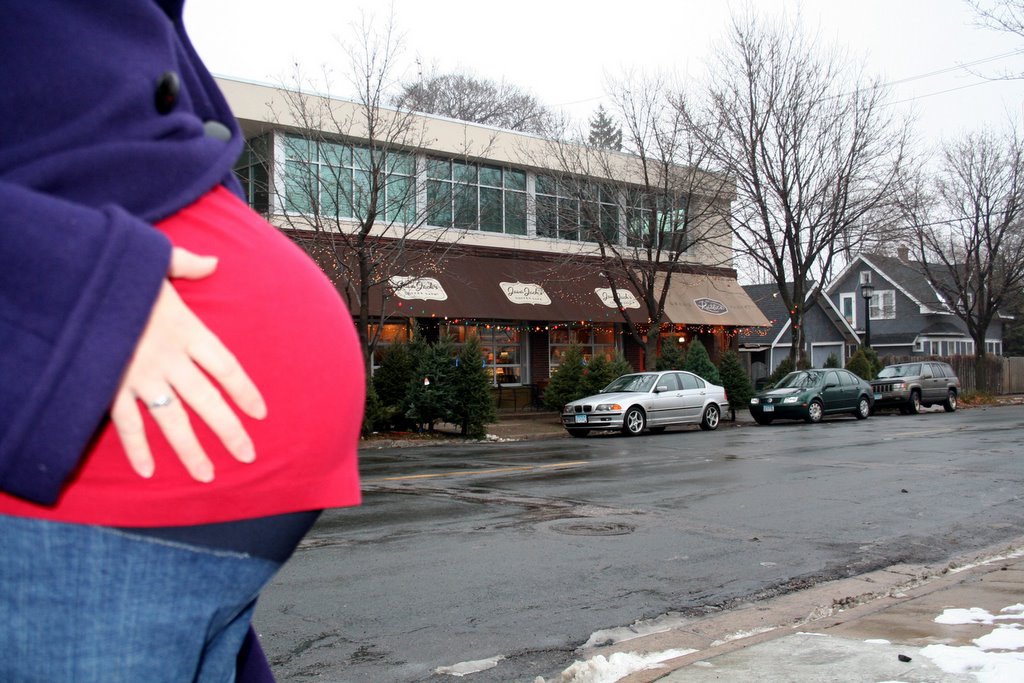
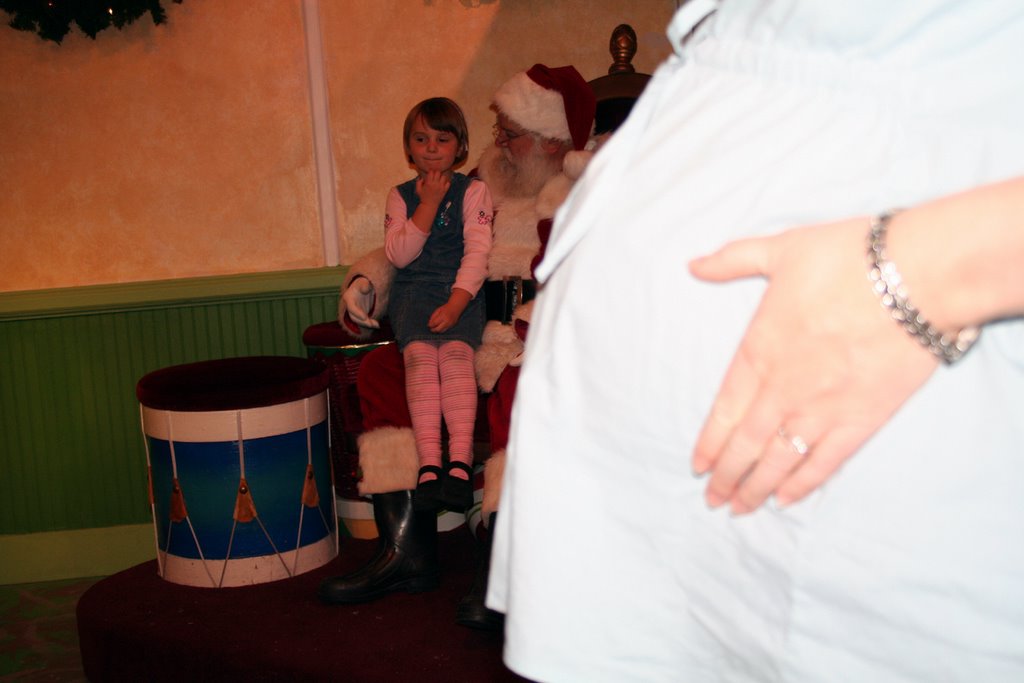
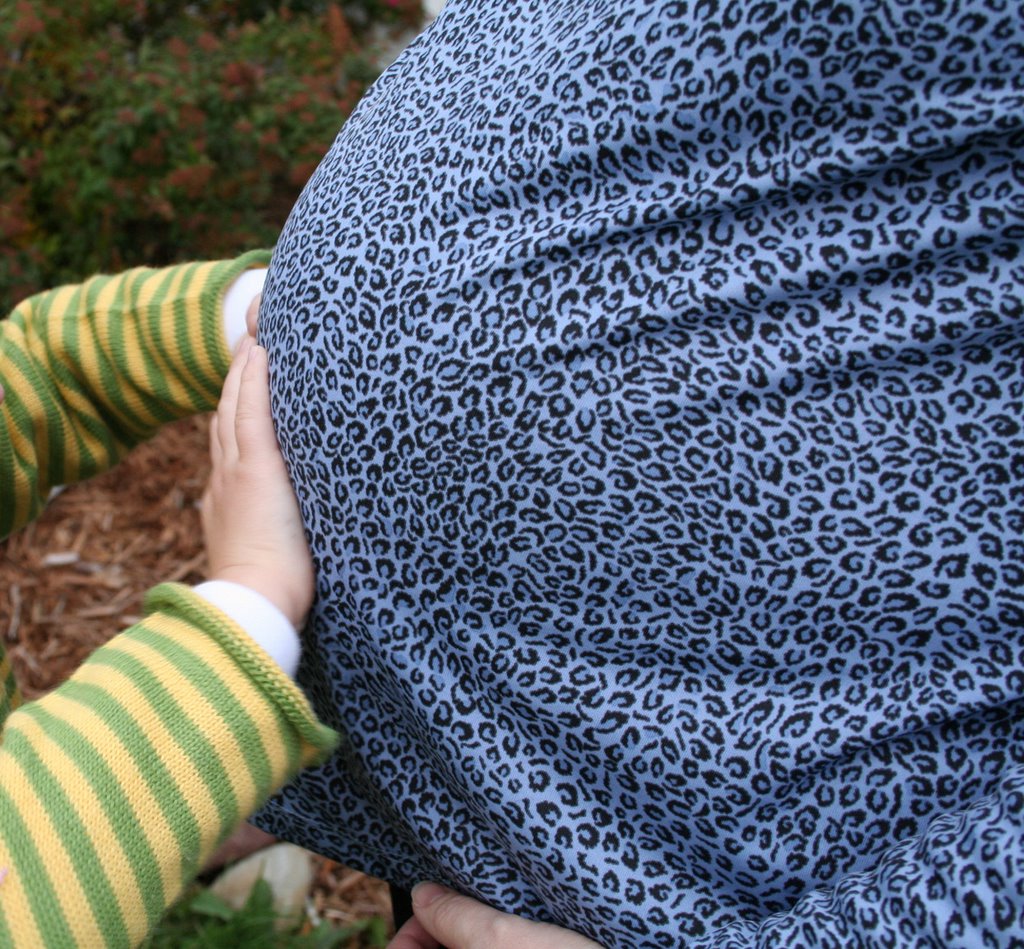
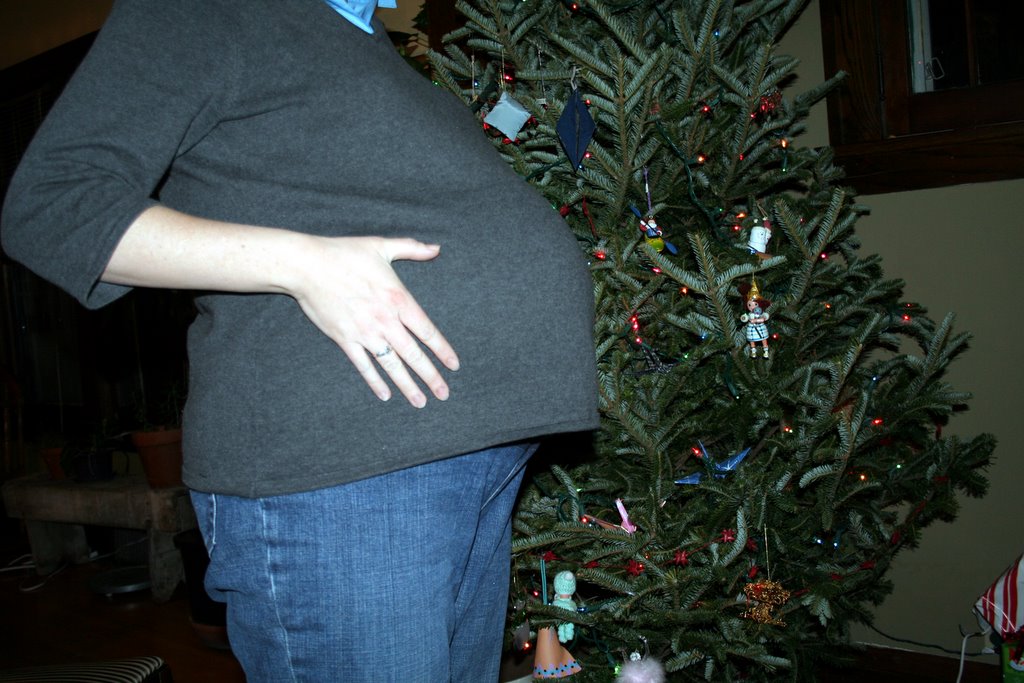
Bellies


Wednesday, October 26, 2005

All Roads Lead to Dick

From the Washington Post:

Fitzgerald has looked closely not only at the possible crimes, but also the context in which they would have been committed. This search, say lawyers in the case, has provided him a rare, glimpse into the White House effort to justify the Iraq war and rebut its critics.

The trail has often led to Cheney's office, which officials describe as ground zero in the effort to promote, execute and defend the Iraq war and the campaign to convince Americans and the world that Saddam Hussein had amassed a stockpile of the most dangerous kinds of weapons. According to the report in yesterday's Times, the investigation also led to Cheney himself.

Tuesday, October 25, 2005

Blink and Teaching

We recently had to go through our annual process of assigning "merit" to the faculty members of our department.

In the category of teaching, I got second to last in our department.

This should, really, be interpreted as last as one guy refuses to even fill out the form.

So, last it is.

This is a tedious process in which we all fill out a form that details all of our research, teaching, and service activities for the previous year. The research and service parts are simple for different reasons. For research, you get a high score if you've published an article (preferably after having gone through a double-blind peer-reviewed process toward publication in a high-ranking journal in the field as opposed to a book chapter). For service, we all basically do too much, so the default is usually the maximum score. For unusual service (meaning something that we don't see regularly), one needs to document what they have done and how it has benefited the department, college, university, community or profession.

Documenting our teaching efforts is an altogether different ballgame. How, for example, does one demonstrate effective teaching? There is no analogous peer-reviewed process that one goes through to demonstrate techniques, efforts, attempts, new ideas, effectiveness, etc. At our university, each professor has students fill out student evaluation forms that differ across departments. While such information can be informative at identifying trends, on its own, it is highly problematic and a quite extensive literature has grown out of identifying the strengths and weaknesses of using such a measure to evaluate teaching effectiveness.

Our department, thanks to two colleagues' efforts in particular, has evolved into using a tripartite system of teaching evaluation: student reviews, peer reviews and self-review.

This is great in theory.

The biggest positive consequence of this method is that it gets us away from relying on one single method of evaluation which is usually gets boiled down to some relatively capricious and one-dimensional number gathered from the student evaluations.

The problem is that the relatively small committee that assigns merit (which, by the way translates into salary increases that literally cannot even justify the amount of time that four Ph.D.s spend reviewing the files each year, let alone the effort required to fill out the paperwork) assigns different weights on each of the three teaching categories. So, for example, one individual might wholly believe in the ability of students to correctly evaluate their professor's effectiveness and, therefore, place 80% of his/her weight on that measure.

At the other extreme, one's assessment of oneself can be overly weighted by a member of the committee. An individual could spend an inordinate amount of time and effort gathering and interpreting data on assessing his/her teaching and its effect on students. This is, mind you, on top of regular assignments and exams that are meant to evaluate student learning. Furthermore, the merit process not only encourages professors to do this during the year, it also encourages extensive documentation during the merit process.

I have always been suspicious of this sort of activity. It reeks of Shakespearean protesting a bit too much. But now, after reading the book Blink: The Power of Thinking Without Thinking by Malcom Gladwell, I have evidence that not only is such documentation is over-the-top, it also may not necessarily contribute to teaching effectiveness.

According to Gladwell, [a]llowing people to operate without having to explain themselves constantly . . . enables rapid cognition.

And paraphrasing from Blink:

Here is a simple example of this. Picture in your mind the face of the waitress or waiter who served you the last time you ate at a restaurant. Or the person who sat next to you on the bus today. Any stranger whom you've seen recently will do.

Now, could you recognize this person in a police lineup? I suspect you could. Recognizing someone's face is a classic example of unconscious cognition. We don't have to think about it. Faces just pop into our minds.

But suppose I were to ask you to take a pen and paper and write down in as much detail as you can what your person looks like. Describe her face. What color was her hair? What was she wearing? Was she wearing any jewelry? You won't believe this, but after attempting to describe the face, you'll have difficulty doing the same task you did before: recognizing that person in a police lineup.

This is because the act of describing the face has the effect of impairing your otherwise effortless ability to subsequently recognize that face.

The psychologist Jonathan W. Schooler who pioneered research on this effect calls it "verbal overshadowing." (See also, this paper). Your brain has a part, the left hemisphere, that thinks in words and a part, the right hemisphere, that thinks in pictures. And what happened when you described the face in words, was that your actual visual memory was displaced.

Thinking bumped your memory from the right to the left hemisphere. When it comes to describing the face, you relied on the memory of what you said you saw, not what you remember you saw.

The problem is that with faces, we're better at visual than verbal description.

If I showed you a picture of Marylyn Monroe or Albert Einstein you'd recognize it instantly. But could you accurately describe the picture? If you wrote a paragraph describing how Marilyn Monroe or Albert Einstein looked, would I even know what you were talking about?

We all have an instinctive memory for faces but by forcing you to verbalize that memory, to explain yourself, I separate you from those instincts.

Schooler has shown that the implications of verbal overshadowing carry over to how we solve broader problems. For example, look at the following "insight puzzle": A giant inverted steel pyramid is perfectly balanced on its point. Any movement of the pyramid will topple it over. Under the pyramid's tip is a $1000 bill. How do you remove the bill without disturbing the pyramid?

This is an example of an insight puzzle. The only way to get answer is if it comes to you suddenly, like in the blink of an eye.

One study found that people who were asked to explain themselves in the process of finding solutions to other insight puzzled solved 30% fewer problems than people who were not asked to explain themselves.

In short, when you right down your thoughts, your chances of having the flashes of insight you need, in order to come up with a solution, are significantly impaired. Just like the act describing the face of the waitress made you unable to pick her out of a police lineup.

In the cases of logic problems, explaining yourself will not have the same effect. Explaining yourself may even help solve the problem or others like it.

Problems that require a flash of insight operate by different rules. "It's the same kind of paralysis through analysis you find in sports contexts," Schooler said. When you start becoming reflective about the process, it undermines the ability. You lose the flow. There are certain kinds of fluid, intuitive, nonverbal kinds of experience that are vulnerable to this process. As human beings, we are capable of extraordinary leaps of insight and instinct. We can hold a face in memory, we can solve a puzzle in the blink of an eye. All these abilities are incredibly fragile. Insight is not a light bulb that goes off in our heads. It's a flickering candle that can easily be snuffed out.


For me, teaching is an activity that requires this "flash of insight." Last year I was involved in a project on campus called the "Lesson Study Project" or LSP for short. In the project a group of us chose one particular idea that seemed to be problematic for our introductory students. We then attempted to dissect the lesson to find out what, exactly, we wanted students to glean from it and then we, as a group, created a pedagogical strategy to get at this problem in the lesson. The LSP requirements included assessment, so we collected pre and post tests from the students in treatment and control groups to see if our unique intervention had any real learning consequences.

Last year we chose a lesson on international trade. A recent article (See William Poole's speech here) claimed that the notion of free trade was problematic because it simultaneously garnered nearly full acceptance on the behalf of professional economists (a rarity among followers of the dismal science) and less than a majority of support among the general public. We suspected that students, while appreciative of the increased consumption benefits associated with trade, were nonplussed about the subject when it comes to production efficiency aspects, and even anti-trade when they realize that their dad may have lost his job due to outsourcing.

Using a combination of a class experiment and case studies, our goal was to get students to see the grey areas. To recognize that such a policy could generate winners and losers and that there were short-run and long-run effects to be discerned.

Part of the process is to have yourself videotaped and to have another LSP member come to your class and take notes on the pedagogical strategy. After having seen my course, in addition to many very helpful constructive comments, all three of the other LSP members were very impressed by the questions that I posed to the class and the instinctive changes I made to augment the trade experiment.

Their first suggestion along these lines? Write it down! Document it! Be more formal about it!

In all honesty, I believe that were I to actually write some of those comments down, and attempt to replicate the same situation in next semester's class, that the spark will have died a slow death. With a script, I'd be lost in the classroom and I'm sure the students would be bored to tears. It would be like Taylorism for teachers.

It is one thing to encourage professors to try new things and to try to see if the new things worked. Its another to sit down and write about it. Document it. One of the main problems we had in last year's LSP is that the instruments we used to measure the effects of the technique were relatively anachronistic. How can you measure the learning consequences of a new technique using old questions? Now we're down a road that I am simply unqualified to drive; developing not only new pedagogical techniques, but also corresponding assessment tools. And let's just say that I refuse to grade interpretive dance.

That is not to say that all documentation is bad documentation. I have journaled after classes and found it to be helpful. But the most successful classroom experiences I have had are when I trust myself, my knowledge, my experience, and my intuition.

Of course, this is scary for a university. There are some teachers that can't be trusted, I suppose. And one way to get at them is to have them document their classroom like an obsessed archivist. To document each and every change and measure their effects.

The problem, identified I think correctly by Gadwell, is twofold. First, just because you measure something, doesn't mean its accurate or even that it was correctly measured for that matter. Second, the act of measuring and documenting itself squashes out the flashes of instinct, which would be the last thing you want to happen in the classroom.

So, when it comes to taking the time to fill out the merit form next year and document all of the tweaks I made to my classes this year, I will hopefully have the guts to do what I believe would better serve my students: read the newspaper instead.

Monday, October 24, 2005

Gunflint Patterns


Big Sister Class

Tonight we took the FYO to a little class at the hospital where she could see where BioMom will be, and where she could learn a little about how to care for a baby. There were about 15 other families there, mainly with two-year-olds. The pregnant women were all about as far along as BioMom and it felt like I was in a room full of Weeble-Wobbles.

I'd Give Up a Seat For You Anytime, Rosa

Rosa Parks Dies At 92.

Thursday, October 20, 2005

Wednesday, October 19, 2005

Making Itsy

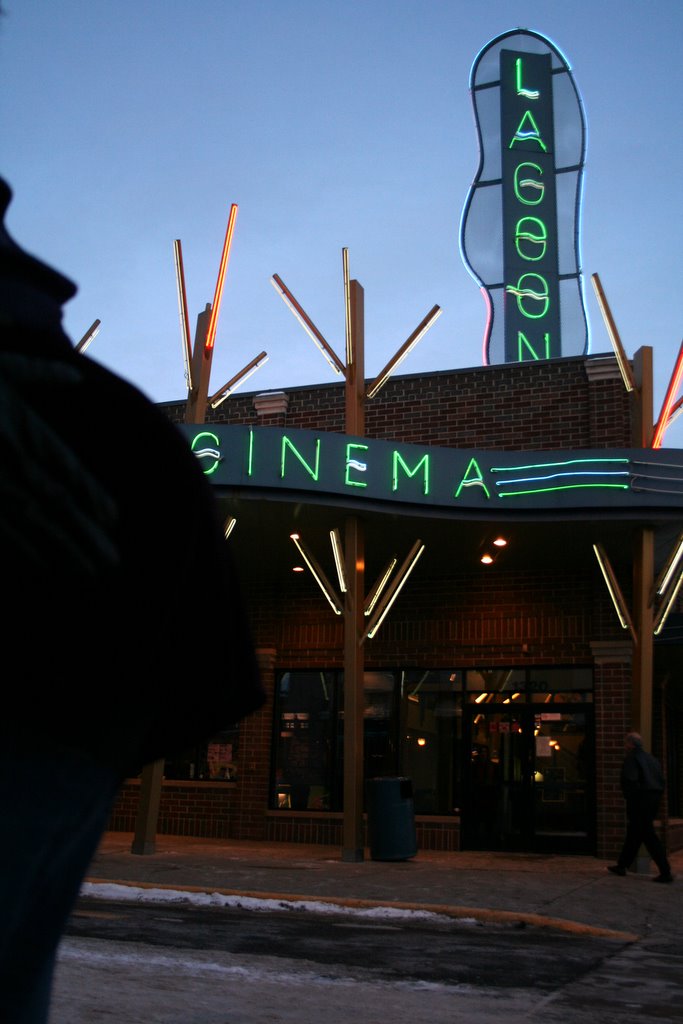
I just heard about the film "Making Grace" about a lesbian couple in their attempts at fertilization. Think it'll come to the Lagoon?

Is Judy Miller a First Amendment Martyr or an Administration Stooge?

I've been reading the Times' interepretation of the events leading up to the release of Judith Miller from her Alexandia jail cell lately. They were late in discussing the issue of her confidencial source (Scooter Libby, as it turns out) because they claim they were standing behind their reporter. Its hard to know if they, and Judith in particular, were really standing up for the first amendment or standing behind the administration. Their argument, as expected, is that if reporters are required by Grand Juries to reveal their confidencial sources, that higher-up administration officials will no longer talk to them, and their credibility as reporters will be lost. On the other hand, without this information, the Roves and Libby's of the world can continue to claim that they didn't leak any information about Wilson's CIA-wife. As discussed by Frank Rich in his Sunday column titled "It's Bush-Cheney, Not Rove-Libby",

[w]hen Mr. Rove was aksed on camera by ABC News in September of 2003 if he had any knowledge of the Valerie Wilson leak and said no, it was only hours before the Justice Department would open its first leak investigation. When Scott McClellan later declared that he had been personally assured by Mr. Rove and Mr. Libby that hey were 'not involved' with the leak, the case was still in the safe hands of the attorney general then, John Ashcroft, himself a three-time Rove client in past political campaigns.

I recommend the entire article as it does a great job outlining the timeline of the White House's creation of the White House Iraq Group (August 2002) developed to create an "uber-narrative" / marketing campaign about the Iraq war, to the Downing Street memo "that the Bush administration was ensuring that 'the intelligence and the facts' about Iraq's W.M.D.'s 'were being fixed around the policy' of going to war", to the famous 16 words about "uranium from Africa" in Bush's January 2003 State of the Union address, to the current depositions of Carl Rove and the attack on Mr. Whistle-Blower-Wilson through the leak about his wife, Valerie Plume.

Of course, most Americans have no clue who Valerie Plume (to be confused with Valerie Wilson) is, what Carl Rove has to do with it, who Scooter Libby is, and what all of this has to do with Iraq. Not to mention the fact that most of us have forgotten about WMD's and that the reason for going to war in the first place never panned out. Fox News (!) even points out that crucial evidence like the Downing St. Memo was basically ignored in the US. Even if it is all spelled out for us on first-grader lined pages, [like it was in the 9-11 report], most couldn't care less. And why should they, there's a new, smaller i-pod out.

Gross.

Monday, October 17, 2005

32 Weeks And Counting

BioMom is starting to get sick of it. Literally.

Today at the doctor's visit (we're headed there every two weeks now which actually isn't too bad. We love the doctor and we get to have lunch together afterwards, which is a great bonus) we explained that last week BioMom was waking up at 4:30, 5:00 and 5:30 a.m. with excruciating back pain. So excruciating that she was regurgitating in response. Not good. Let me just say that. The doctor explained that she might just be one of those pregnant women who has to wake up for an hour in the middle of the night. Yeah. You know. Get up, get some cereal, watch some television. Whatever. Just get up and move around. At 4:30 a.m. The sweet woman that she is, she expressed concern about my sleep. The doctor offered the solution of sleeping apart.
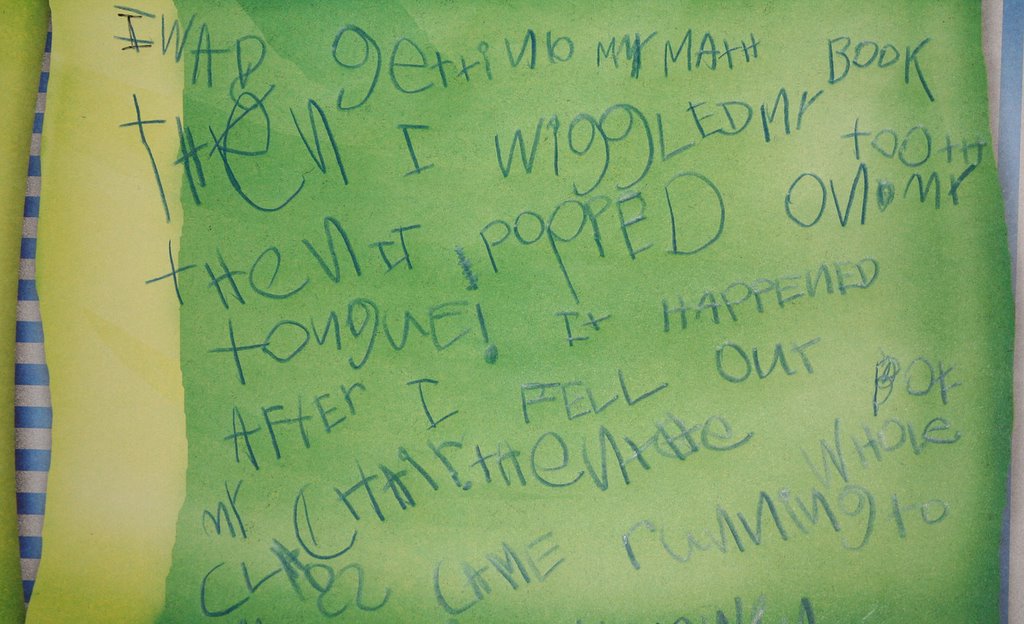
Now I'm getting sick of this too.

I'd be sick of it if a) she weren't such a cute pregnant woman and b) I weren't so terrified of the baby.

I think we're ready though. We did the Target run. Got the baby shampoo. Well, basically we got everything with the word "baby" on it, or so it seemed. Or so my Visa thought, I should say.

But yeah. I think we're ready. The only thing left, I can't buy until the night before. . . These cheezy books we read include a little "Dad Tip!" for the expecting father. They are normally so basic, they are laughable, but this final one is fantastic. Buy a birthday cake!

Definitely a Dad Tip I'll take! Flourless chocolate anyone?

Closer To Fine

Bedtime Conversation


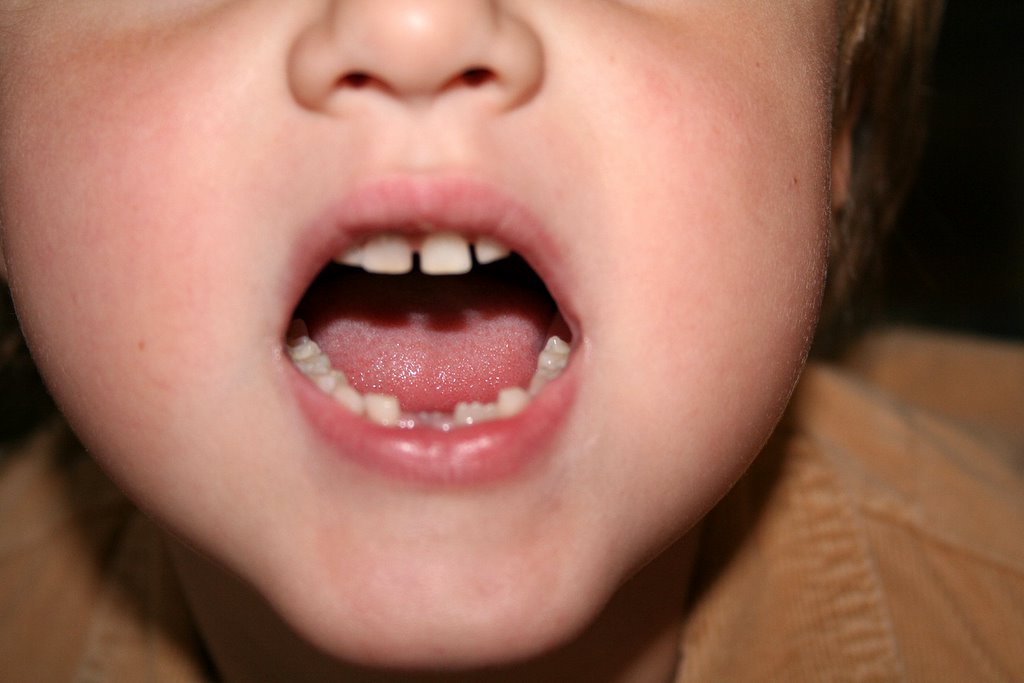
So, what will happen if you lose the tooth while we're up north this weekend?

The Tooth Fairy will come?

How do you know? We won't be at home. . .

She'll know where we are. She knows everything.

How do you know it's a she?

All fairies are girls.

Oh, no, honey. I'll introduce you to a boy who is a fairy.

Friday, October 14, 2005

These Are A Few Of My Favorite Things

39%: A number representing the President's approval rate.

2%: A number representing the President's approval rate among African Amercian Voters. Which, by the way, is an all time low among any President.

Jonathan Odell's commentary on All Things Considered yesterday titled "How the Races Don't Relate."

Cujo

Tuesday, October 11, 2005

The Family Bed Continued. . .

So, last week, out of sheer exhaustion, BioMom gave in to a particular situation regarding the rules around the FYO's entrance into our bed during the night, thereby opening up a loophole heretofore unexpected.

The FYO wet the bed.

She wet the bed and came in to BioMom requesting asylum. BioMom, in a sleep-induced coma, didn't get up and change the sheets (I was out of town), thereby avoiding any potential future loopholes.

And so that night went. FYO snuggled up in our bed.

Last weekend, some friends were over for the night with their three-year-old girl. They started out in the same room, but, as those things go, that devolved quickly for the sake of having fairly rested kids the next day. So, the three year old slept with her moms, and our FYO, alone in her bedroom.

That night at approximately 4:30 a.m., I hear the familiar opening of the FYO's door and the careful creaking down the hall, followed by the soft, Mom?. . . Mama?

I, feeling like I was never, in fact, asleep at all, responded: What, [FYO]?

Someone peed in my bed.

My less-than-generous response: That's okay, you can go sleep in the upper-bunk.

She had, clearly, not expected this obvious answer.

But. . . But. . . [our friend's three-year-old] peed in BOTH beds!

This was, literally impossible, given that the three-year-old spent less than five minutes in the FYO's room that night, but I'll give her some kudos for creativity. I walked her back to her room to find that the beds were, in fact, dry. Tucked her in and high-tailed it back to my own, snuggly, bed.

Happy National Coming Out Day, Y'all!

Monday, October 10, 2005

Unauthorized Reproduction Bill

Check out this, which was tipped off to me by Taggert over at A Random Walk.

Let's just say I'm glad we're 31 weeks along. . .

Republican lawmakers are drafting new legislation that will make
marriage a requirement for motherhood in the state of Indiana,
including specific criminal penalties for unmarried women who do
become pregnant "by means other than sexual intercourse."


According to a draft of the recommended change in state law, every woman in Indiana seeking to become a mother throu gh assisted reproduction therapy such as in vitro fertilization, sperm donation, and egg donation, must first file for a "petition for parentage" in their local county probate court.

Sunday, October 09, 2005

Saturday, October 08, 2005

HFRM#1 Guest Blogs About FFFN

Career Options

6:00 p.m. - FFFN begins.

it started off like any other normal FFFN ... the FYO's standard question, "did you bring me a gift?" followed by a quick dig in my coat pocket for a little girlie bubble bath. great dinner made lovingly by BlogAuthor. big bottle of wine for me and BlogAuthor to share. a special non-alcoholic drink for Biomom and Itsy. sharing highs & lows with the FYO pointing her little finger to instruct us as to who's turn it is to share next. and a rousing game of Moose in the Haus. good times.

8:00 p.m. - the bed-time routine begins.

as per usual, we all staked out our usual spots on the massive bed and then BlogAuthor read a book of FYO's choice. there were the typical moments ... FYO's legs kicking here and there and her finger poking at her lip, wiggling and jiggling from sheer exhaustion from her long week as a kindergartner. BlogAuthor carefully reading every. single. word. as to avoid any demand from the FYO to start over from the beginning, while at the same time repeatedly asking FYO to sit still and pay attention. the threat of an ultimatum feeling thick in the air. Biomom cuddling with FYO and exhibiting the utmost calm and patience. Itsy giving a little kick just to say, "hey! i'm here too!" and me, HFRM#1, holding onto FYO's little foot ... watching the whole scene. loving all of these people who love me right back.

with the reading done, we played a quick game of hide-n-seek followed by "jumping toura loura" with FYO jumping on her bed while we sang.

8:15 p.m. - eenie meanie minie moe.

again, as per usual, the time-tested eenie meanie minie moe method was employed skillfully by the FYO to select one of us to spend 5 mintues with before saying final good-nights. and, i was selected. as much as i feel honored by being selected and LOVE these quiet moments when i'm alone with the FYO and her thoughts ... it is also terrifying. i am ALWAYS worried about saying the wrong thing, doing the wrong thing, and screwing up the FYO for life. i swear she senses this fear in me and goes for the soft spot. every. time.

our 5 minutes of q&a time started off easy enough.

FYO - "why do you like working at [the museum]?"

HFRM#1- "well, i love the art and i work with fun people!"

FYO - "you're lucky, you get to see the art anytime you like!"

HFRM#1 - "yes, i am lucky!"

FYO - "i like [the museum] because it has all this great art and they let EVERYONE see it for free!"

HFRM#1 - "yeah! can i quote you on that?"

i grabbed a pillow and settled in. and just as i started to think this was going to be a relatively easy q&a session with FYO, she struck.

FYO - "when i grow up, i want to work at [the museum] like you do. or be an attorney. or be a professor. or be a bride."

my stomach flipped and i heard my heart beat loudly in my ears as if to say, "don't.screw.this.up.don't.screw.this.up.tha-thump.tha.thump." my mind raced, "what do i say? what's the right thing? i have to say something! she's waiting for me to say SOMETHING!"

FYO just sat on the bed wiggling and staring at me, playing with the heart necklace around her neck that i gave her earlier in the night.


HFRM#1 - "well, that's a good list of career options ... um, so ... why do you want to be a bride?"

FYO - "because you get cake."

sweet relief flooded over me. OF COURSE! this was about CAKE! ever since the first time i ever met this girl, she has been ALL about the CAKE! the first word i heard come out of her mouth was when she was just over a year old and strapped into a highchair, eyes glued to this big beautiful cake on the table, fork in hand, patiently waiting for someone, anyone, to GIVE. HER. A. PIECE. ALREADY. out of peer frustration she looked around the room at the adults chatting away and then let out a very loud plea for "CAAAAKKKKEEEE!" priceless.

HFRM#1 - with a bit of a chuckle - "oh honey, you can have cake anytime! in fact, i'd be happy to make you a big ol' cake tomorrow!"

FYO - "yeah, but when you're a BRIDE you get TWO pieces." she held her two little fingers up to my face to emphasize the importance of this point.

HFRM#1 - "seriously, i'll make you a cake tomorrow and you can have as MUCH as you like. really."

FYO - "yeah, but i want to be like you and be a bride ..."

the relief that had craddled me in its arms just a few seconds ago just slammed me into a brick wall. another stomach flip. claustrophobia coming on strong.

HFRM#1 - "um, yeah ... only, i've never been a bride, sweetie."

Suddenly FYO stands for "fourteen year old" rather than "five year old":

FYO - "SERIOUSLY?!?!?!" hands on hips and eyes bugged out in amazement.

HFRM#1 - "seriously."

FYO - "not even with [HFRM#1's ex]."

HFRM#1 - "no, no, nope ... no, i was never a bride. not even with [ex]. thank goodness ..."

FYO - "SERIOUSLY?!?!?!"

HFRM#1 - "seriously."

FYO - "but why not?"

HFRM#1 - "um ... well, sometimes adults just don't see eye-to-eye. sometimes, they don't agree on really important stuff."

FYO - "but, why couldn't you just come together?"

blood rushes to my face and i feel HOT. that is THEE question, right? how does she know at the age of five that this is THEE question? the question that inevitably follows the end of any relationship. . .

HFRM#1 - "um, well ... it's just complicated. do you know what that means?"

FYO - "yeah, messy."

HFRM#1 - "yeah, messy is right."

FYO - "well, i still want to be a bride someday."

HFRM#1 - "and maybe you WILL be a bride someday. and that will be a great day. but, you know, it's just ONE day. and you can be a bride AND a lot of other things all at the same time."

From the bottom of the staircase we suddenly hear ...

BlogAuthor - "5 minutes are up FYO! HFRM#1 needs to say good-night now!"

sweet relief returns, along with a little fear. did i say the right thing? did i screw her up for life??? it may take years to know how much damage i just caused in this 5 minute q&a.

i give FYO a big hug and kiss, then tuck her in. we exchange our "good-nights!" and "i love yous" and i make my way downstairs to BlogAuthor and Biomom, feeling a little dizzy and anxious. i grab my glass of wine and hold in both hands as i walk into the family room. i want to tell them everything and have them reassure me. i want them to say things like, "you did great! of course you didn't screw her up." but, i don't know anything ABOUT kids. what if i tell them what i said and it turns out to be ALL WRONG? what if they say, "omigod. you said WHAT to our child? how stupid are you??? that's it. you're paying for her therapy."

it's a gamble. but, i tell them. and they validate me and reassure me in that way that only your oldest and dearest friends can do. and suddenly we're laughing and BlogAuthor is telling me about something she said to FYO earlier in the day that is MUCH more likely to cause permanent damage.

i breathe deeply and relax into the sofa, take a sip of wine, and feel so grateful to have FYO and her moms in my life. i look at Biomom's belly and think about Itsy. one more kid in my life to love and spoil ... and try hard, hard, hard not to screw up.

Friday, October 07, 2005

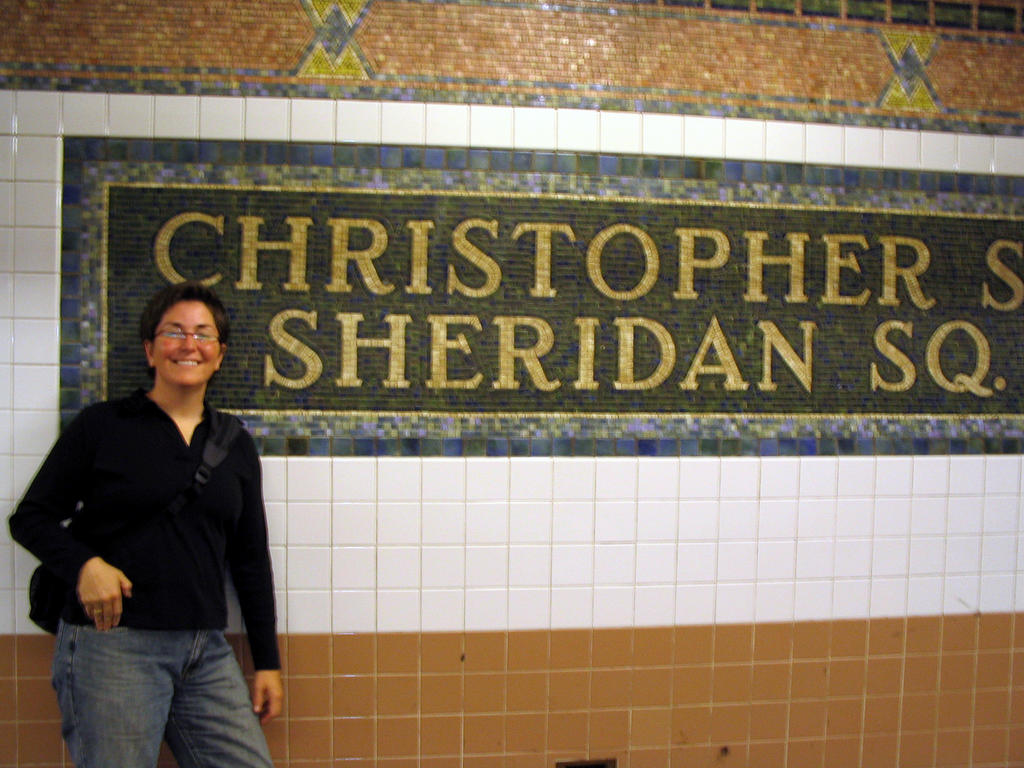
Christopher Street

That Guy Who's Always There


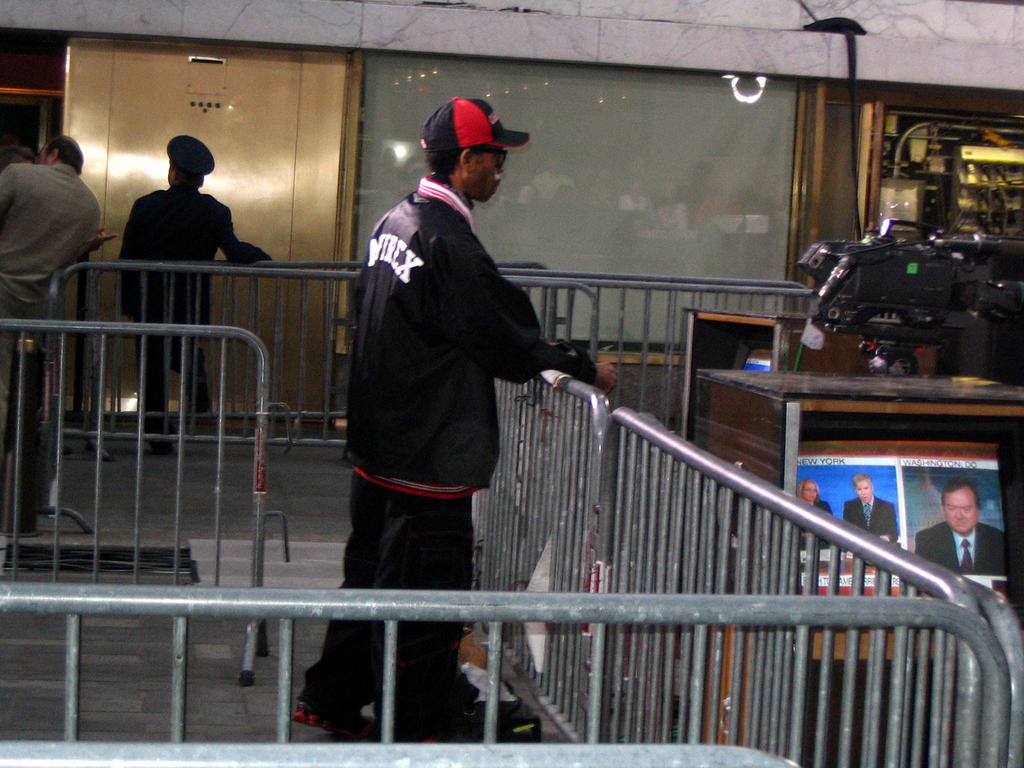
Cousin can attest that I actually emailed the Today Show about this guy wondering why he was ALWAYS in the audience. Duh.

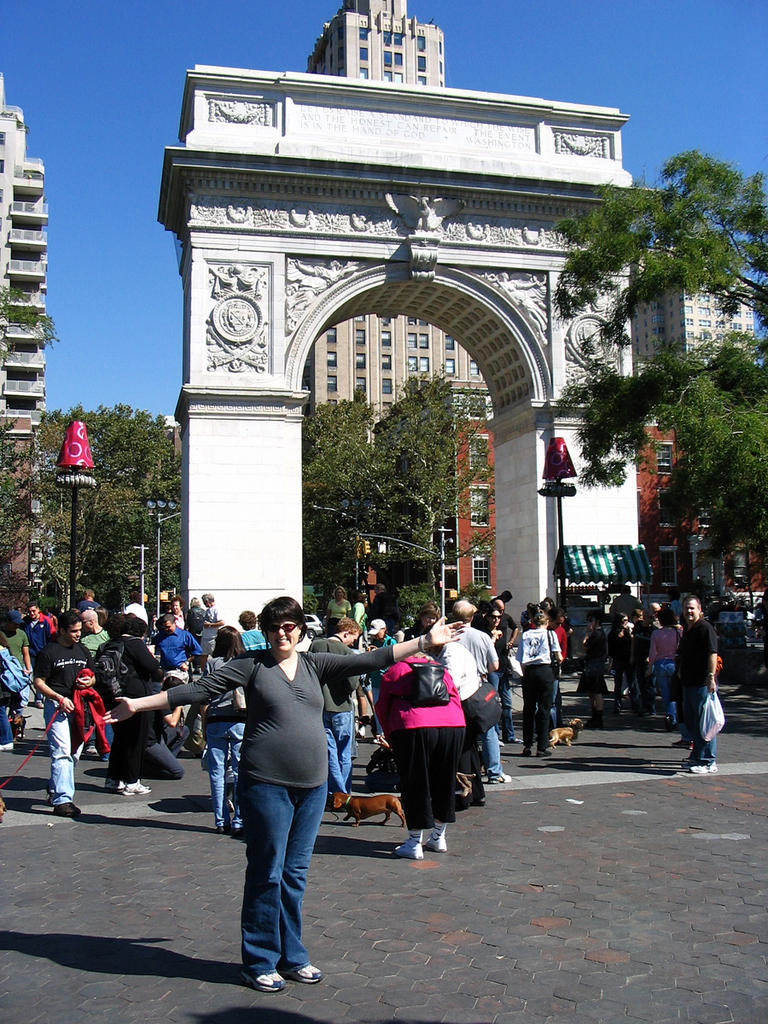
Itsy at Washington Sq. Park

Thursday, October 06, 2005

Big Apple Patterns


Tip o' the Nib to HS Friend


Love the description, HS Friend!

My old next-door-neighbor, I discovered when covering all of our celeb sightings, has seen Willard!

Tuesday, October 04, 2005

Say Something Nice About Al Roker!

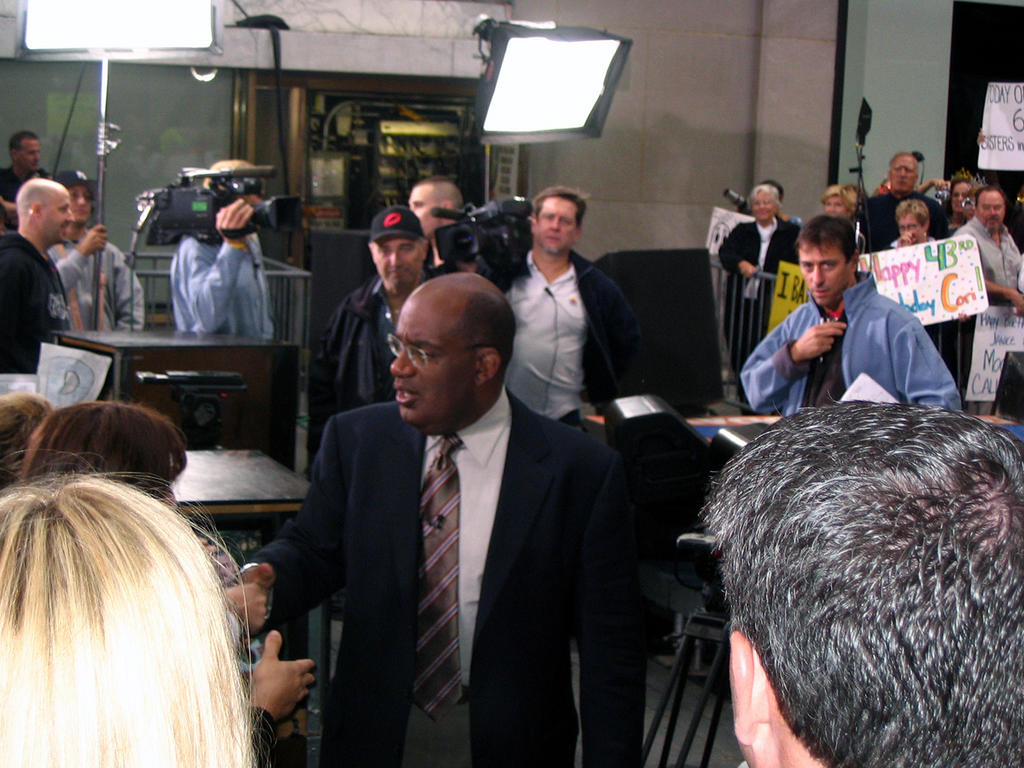
So, BioMom and I saw Al Roker yesterday in Rockefeller Center.

Yes. We were the nerds that got up before 7 a.m. and drug our sorry arses over to Rockefeller Center to see if we could catch a glimpse of Katie Couric.

I rushed her out before we could see Katie though as we were late for breakfast with some friends in Tribeca and the President was yawning on and on about Supreme Court Nominations bullshit("I'm sure her mother and father would be proud of her today." WTF? Did he say that about Roberts?) we just ran out of time before Katie stepped out to the crowd. But even with having only seen Al, my Celebrity Sightings Quota increased by over 200% this weekend!

Before this weekend, by only celeb sighting was one Newt Gingrich in what was basically a strip mall in Fairfax Virginia. On the suggestion of a friend from BioMom's work, however, we happened upon a hoppin' brunch spot in the lower east side, Prune which, apparently attracts the up-and-coming!

There, we saw Maggie Gyllenhaal (and, only in retrospect did we realize she was with her boyfriend, Peter Sarsgaard), and Maya Rudolph who, to BioMom's delight was very pregnant! (BioMom was watching the tail-end of SNL the night before in our hotel and was certain that it wasn't a pillow!).

We were literally, all leaning against this van waiting for a seat. Together. Not five feet apart. Of course, I had no clue what a superstar Maggie is, and so I mumbled some inane compliment to her: I'm sure, you've heard this, but we thought you were brilliant in Happy Endings after which she promptly turned away.

Later that night on the way back to our hotel, a crowd had gathered outside of Chicago, and we waited to see Brooke Shields come out, looking exhausted after two shows that day.

My brother and I once had a huge fight over Al Roker.

Of course, it wasn't about Al Roker. I'm sure it had to do with childhood or some other perceived loss, but Al Roker was our easiest fishhook at the time. After arguing the night before, we woke up in our little Bed and Breakfast off of Dupont Circle in DC where we were staying and he flipped on the Today show. I mumbled something about hating Al Roker and he flew off the handle: SAY SOMETHING NICE ABOUT AL ROKER!! And wouldn't let it go.

Oh, the things we remember.

Oh, and don't worry, my infatuation with Wikipedia will wane.