Friday, March 31, 2006

Wednesday, March 29, 2006

Let's Roll

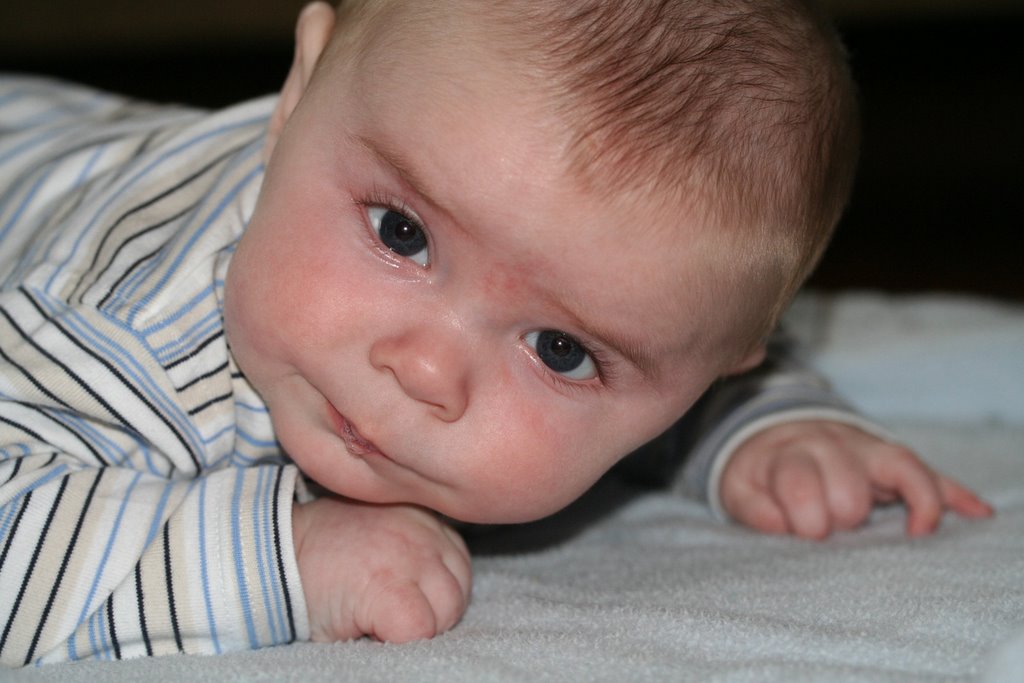
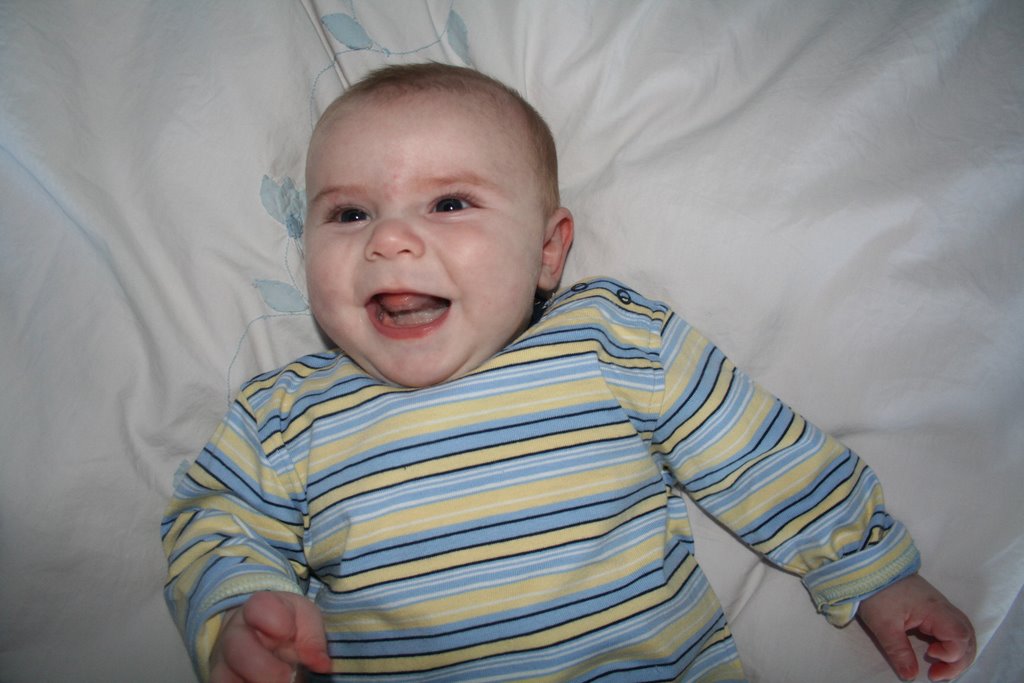
Today Mr. Big is beginning to roll over from his back to his front!


Monday, March 27, 2006

Broken Records

As of last Friday, Mr. Big was 18 lbs 3 0z, at 15 weeks, that growth indicates a 97% increase since 9 December. At the time of writing this post, he is taking his morning nap (it began at 8:22 a.m.) after sleeping a record 11 hours straight last night without a peep (from 8 p.m. to 6:47 a.m.)!


Sunday, March 26, 2006

Stats 101

Any advice on how to explain to SYO that it is not statistically possible for Sidekick to ALWAYS get the bigger cookie/roll/brownie/piece of cake etc. etc. is sought.


Friday, March 24, 2006

Chinese Seeking Identity In America

Here is a nice New York Times piece for all of you out there in the process
(or have gone through the process) of adopting from China via the Freakonomics Blog.

Some snippets:

As the oldest of the adopted children move through their teenage years, they are beginning - independently and with a mix of enthusiasm and trepidation - to explore their identities. Their experiences offer hints at journeys yet to come for thousands of Chinese children who are now becoming part of American families each year.

Those experiences are influenced by factors like the level of diversity in their neighborhoods and schools, and how their parents expose them to their heritage.

"We're unique," Qiu Meng said.

. . .
Jane Brown, a social worker and adoptive parent who conducts workshops for adopted children and their families, says the families should directly confront issues of loss and rejection, which the children often face when they begin to understand the social and gender politics that caused their families in China to abandon them.

Thursday, March 23, 2006

Working Girls

Taggert over at A Random Walk tipped me off to this recent article, "Working Girls" in Prospect, by Alison Wolf.

Her main point:

[F]or the first time, women, at least in developed societies, have virtually no career or occupation barred to them.

This marks a rupture in human history. It is one that has brought enormous benefits to many people, and to many women in particular. But its repercussions are not all positive, either for society as a whole, or for all women. We are no more likely to return to the old patterns than we are to subsistence agriculture, so we need to understand what the new female labour market means for all our lives.

Three consequences get far less attention than they deserve.

The first is the death of sisterhood: an end to the millennia during which women of all classes shared the same major life experiences to a far greater degree than did their men.

The second is the erosion of "female altruism," the service ethos which has been profoundly important to modern industrial societies—particularly in the education of their young, and the care of their old and sick.

The third is the impact of employment change on childbearing. We are familiar with the prospect of demographic decline, yet we ignore, sometimes wilfully, the extent to which educated women face disincentives to bear children.


I can't decide if this is an article that says something to the effect of, for all that change, we are really still the same, or whether or not it points to really interesting shifts in our culture. See below (my bolds).


One could interpret today's feminist assumptions as reflecting the appetite of global capitalism for all talent, female and male, at the expense of the family. Certainly our current economic arrangements offer precious little support to family formation. On the contrary, they erect major barriers in its way. We all know by now that in most developed countries, birth rates are well below replacement level. Less recognised is the massive change in incentives to have children. In the past, adults had no tax-financed welfare state to depend on. Their families were their social insurance policies: children paid. Today, they expect the state to take care of their financial and health needs when ill or retired, regardless of whether they have six children or none. The benefits we get are completely unrelated to whether or not we contribute a future productive member to the economy.

Moreover, our labour market, with its greater gender equality, makes childbearing a very expensive prospect for successful professionals. Rearing a healthy, balanced child requires intensive attention and large amounts of time, and is not something that technical progress is going to alter. The price of that time is especially high for high-earning, busy elite parents—female or male. If they give up or cut down on work, the opportunity cost in terms of income forgone and careers stalled is far greater than for an unskilled 16-year-old school-leaver. In addition, elite children are expensive. Children are dependent for longer, high-quality childcare is costly and formal education has become increasingly important as the route to success. Parents know this, and it explains why the professional classes devote so much money and attention to their children's schooling.
. . .
The hard economics tells us that professional women will have to give up most if they have children, and so will be least inclined to do so. Highly educated women overwhelmingly stay in work and so pay little or no earnings penalty when they have children. But more and more of them in the developed world have no children at all. "The rich get richer and the poor have children" still applies; but this time around, it is women specifically that we are talking about. About 30 per cent of graduate women born in the early 1960s entered their forties childless. For graduate women born in 1970 (a substantially larger group) the expected figure is 40 per cent.

Unlike professional graduates, childbearing is a rational career choice for academically failing girls and one that a good many duly select, especially in countries where they are supported by the state.

Wednesday, March 22, 2006

Sunday, March 19, 2006

More on The Phenomenon of Women Choosing to Have Children Sans Men

There has been a recent flurry of attention paid to the apparently growing number of women having children (by choice) without men. This includes both heterosexual and lesbian women, and the statistics attempt to exclude accidental out-of-wedlock births.

The latest installment is from Sunday's New York Times Magazine, Wanted: A Few Good Sperm
by Jennifer Egan which focuses on a few women who are choosing to conceive without husbands, boyfriends, or even prospects of partners.

One hopes to join a population of women that everyone agrees is expanding, although by how much is hard to pin down because single mothers by choice (or choice mothers), as they are sometimes called, aren't separated statistically from, say, babies born to unwed teenagers. Between 1999 and 2003 there was an almost 17 percent jump in the number of babies born to unmarried women between ages 30 and 44 in America, according to the National Center for Human Statistics, while the number born to unmarried women between 15 and 24 actually decreased by nearly 6 percent. Single Mothers by Choice, a 25-year-old support group, took in nearly double the number of new members in 2005 as it did 10 years ago, and its roughly 4,000 current members include women in Israel, Australia and Switzerland. The California Cryobank, the largest sperm bank in the country, owed a third of its business to single women in 2005, shipping them 9,600 vials of sperm, each good for one insemination.

Most of these articles focus on changing social norms:

As recently as the early 60's, a "respectable" woman needed to be married just to have sex, not to speak of children; a child born out of wedlock was a source of deepest shame. Yet this radical social change feels strangely inevitable; nearly a third of American households are headed by women alone, many of whom not only raise their children on their own but also support them. All that remains is conception, and it is small wonder that women have begun chipping away at needing a man for that — especially after Sylvia Ann Hewlett's controversial 2002 book, "Creating a Life: Professional Women and the Quest for Children," sounded alarms about declining fertility rates in women over 35.

. . .

In the 25 years since she founded Single Mothers by Choice after becoming pregnant by accident, Jane Mattes, now 62, has seen her group's membership conceiving at younger ages (the median age among members is 36) and more often having second children. But the biggest change, Mattes says, is that the stigma attached to this form of single motherhood has largely faded. "People used to come into our meetings literally afraid to walk in," she told me. "We don't see that as much anymore. Everyone seems to know somebody who did it, which wasn't the case even 10 years ago."


Others on the technology and economics of it all:

The Internet is also a factor; as well as holding meetings through local chapters around the country, Single Mothers by Choice hosts 11 Listservs, each addressing a different aspect of single motherhood. Women around the world pore over these lists, exchanging tips and information, selling one another leftover vials of sperm. (Once sperm has shipped, it can't be returned to the bank.) Karyn found both her sperm bank and reproductive endocrinologist on these Listservs. Three-quarters of the members of Single Mothers by Choice choose to conceive with donor sperm, as lesbian couples have been doing for many years — adoption is costly, slow-moving and often biased against single people. Buying sperm over the Internet, on the other hand, is not much different from buying shoes.

Still others concentrate on the no-man part of the story. I'd put this article in that camp. Here are a few snippets:

Now, as we sat outside, she said: "There's nothing I'd like more in life than to have the whole picture and to share it all. To have the baby, to have the miniwagon, to have the husband, morning soccer games and P.T.A. — he's out manning the grill, and I'm mixing the margaritas. But I think if I had to choose today between becoming a mom or finding the perfect man and I could only have one today, I would choose becoming a mom. And hope that I have my lifetime to find the other."

"Maybe in six months or a year I'll have more insight about it, but something radical is going on in my brain about my relationships with men. O.K., so I'm not going to keep trying to have this picket-fence-y life. I'm waving the white flag. And now I have permission to directly pursue what I want. It's a very curious and ambivalent liberation, because I would rather not be single. It's not my first choice."


Glossary:

"proven fertility": meaning that at least one woman conceived using his sperm

"identity-release donor" (also called an "open donor" or a "yes donor"); a growing and extremely popular category of sperm donors who are willing to be contacted by any offspring who reach the age of 18.

Saturday, March 18, 2006

Why Wisconsin Is Good

Even if you don't care about the packers:

Check out this article from the Washington Post: Wisconsin Voters Prepare to Weigh In On the War in Iraq

From Baraboo and Monona to Madison and La Crosse, antiwar activists invoked a 1911 state law to schedule a bring-the-troops-home referendum designed to send a message to Congress and the White House that the war is costing too many lives and too much money.

Friday, March 17, 2006

I Have To Admit, It's Gettin' Better! It's Gettin' Better All the Time

Thank God for adreneline.

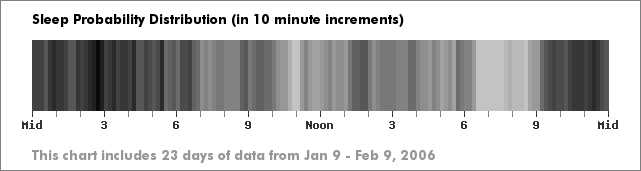
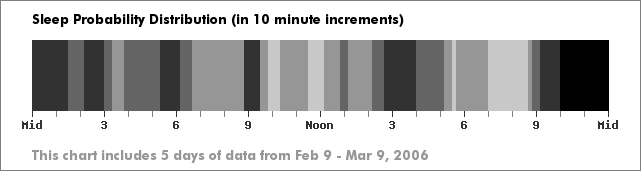
The below images are probability distributions of sleep for ZeYo for a) 0-1 month, b) the first month, c) the second month and d) the third month.

The interpretation is this: black = probability of 1 that he is asleep and white = probability of 1 that he is awake.

Here is the description from the (genius) programmer:

The number of gray scale values depends on the number of days in your chart. If you have two days in your chart, then there will be three colors: black, 50% gray and white. The reason is that the different possibilities for being asleep at a given time for the two days would be:
2/2 (100% - asleep both days at a given time),
1/2 (50% - asleep one day, not the other at a given time) and
0/2 (0% - asleep neither day at a given time).

The more days in your sample, the more possible gray scale values. So if you have a months worth of data (31 days max), there will be 32 shades of gray:
(0/31 through 31/31). This would be approximately 0% black, 3% black, 6% black, 10% black, etc...


It's no wonder new parents are exhausted.


To get this data, I participate in the beta version of some very fun software that I recommend to new parents. Check out Trixie Tracker which just launched last week!

I found the "telemetries" as they are called, to be invaluable, especially in the first month. We were able to keep track of inputs and outputs, sleep, medicine, nursing, etc. At this point, we have devolved down to basically just sleep. During the second month you'll notice that I have less data. I made the terrible, self-esteem crushing choice to go on the job market this year and that was during the time of the on-campus interview. (I'll blog about that when the experience becomes more of a distant memory). I got caught up in the drama of it all and had no energy left over to document ZeYo's details.

You can see over the course of the months, however, that he's getting on Central Standard Time and abandoning the ranks of the living dead and . . . So are we!

Thursday, March 16, 2006

Snowman


Wednesday, March 15, 2006

Without Hue

Through the Looking Glass

The Inadvertent Snow Angel

I am currently on spring break, but technically, only half of that is true. We got about two feet of snow on Monday and are expecting another 4-8 inches tomorrow!


Saturday, March 11, 2006

More Interesting Gender Phenomena

Gender is another pet subject of mine. I am simply fascinated by the cultural transmission and expression of gender in different societies, its nature and nurture dimensions, and the crossovers between gender, sex, and sexuality.

Tonight was a first for me.

At a friend's house we met a young girl who, essentially, liked to cross-dress.

I know this sounds strange in our world as we know it. I mean, women wear pants, etc.

But clothes are coded very differently for young girls than they are for older girls and particularly vis-a-vis women [I can dress in a very non-gender-specific way and noone cares or notices. Look at Ellen as an example]. And they are extremely gender-specific.

I posted about the prevalence of young boys in our lives that do this back in December of 2004.

Anyway, so, I had never seen a girl like this. Well, I shouldn't say that. Of course, I've seen girls like this before -- essentially I am one of them. Let me clarify: I have never seen a five-year-old girl like this before.

She was wearing a short sleeve t-shirt over the top of a long sleeve t-shirt that said, in block letters B-A-S-E-B-A-L-L!, and pants that her mom called "skater pants" which seemed to be kahki's that looked to me like pants one would get at REI for hiking.

She was beautiful!

I commented wistfully to her mom about it, pointing out that our SYO would never wear such clothes and she started telling me how this girl had become extremely aware of gender over the last two years and has very attuned antenae about gendered cues in clothes and manners.

It was like hearing myself describe the SYO, but in reverse, somehow. Like the negative. It was like that episode of Seinfeld where they met 'bizarro Jerry'.

Apparently this girl notices all of the slight differences in girl-wear--the tiny stitching around the edges of t-shirts, capped sleeves, larger necks, etc.--and refuses to wear them!

She's obsessed with spiderman paraphernalia.

She was wearing skater pants!

And, to top it all off, her mom showed me that she was wearing little boy undies: Ninja Turtles!

Wow!

The mom of this rock star and I had a great conversation about gender and how it plays out with these young girls. For the girls of our SYO's variety, the marketers inundate them with these princess and barbie images which one cannot help but think will have a negative impact on their self-esteem and body image. This is not even including the misogynistic disney films that portray evil women antagonists (who are described as "ugly" to boot!) and beautiful and wealthy women protagonists who, ultimately, are saved by some (usually dapper) prince.

I won't even go into the Barbie debate.

I told her some of the myriad manifestations of this in our SYO including her expression to become a "bride" when she grows up.

I suggested to her, too, that such an extreme expression of gender (one way or another, really) has no direct connection to sexuality, although I have my suspicions for this spry one.

Surrepticiously, I did the "finger test" to see if it would match my suspicions. I mention this test in this post as it related to Chemistry.com's personality test. What I did not mention in that post, is that lesbians are more likely than heterosexual women to exhibit the same pattern of finger length as heterosexual men. See this link for details of the study.

Anyway, needless to say, this girl's finger's were a lot more akin to mine and BioMom's than they were to our own hyper-feminine SYO's.

Thursday, March 09, 2006

Brotherly Birthday Wishes

Congrats to Sidekick and Her Folks!

They got their referral yesterday from China!!! They are getting a little two year old girl in May!

Another little one in our lives!

Wednesday, March 08, 2006

I Must Be Doing Something Right

Or really wrong. . .

Tomorrow is our midterm for Intermediate Microeconomic Theory.

Between yesterday and today 10 percent of the class has dropped.

The New York Times Weighs In On SIPP Funding

A few days ago I posted this petition regarding the President's decision to discontinue funding for the longitudinal SIPP data set.

I worked with the data set when I was a research fellow at the Institute for Women's Policy Research where we studied the effects of changing what was then our "welfare" system to a set of block grants to states. Specifically, we looked at the link between people's use of AFCD and food stamps predicting that once people were forced off of AFDC, they would not use food stamps even if they qualified for them. This research contributed to this report.

The point is, this data set allows researchers of all stripes to answer many extremely important questions and make legitimate predictions about the consequences of any policy change.

I can only assume that Bush (as he has shown in the past on other important decisions) does not value credible "intelligence".

On March 4th, the New York Times weighed in on the subject. Here is the article:

The White House has a sorry history of withholding information that the public and Congress need to make informed policy judgments. A proposal in President Bush's new budget would take that damaging tendency one step further by eliminating a government survey that captures the real-world impact of welfare reform, Medicaid, child-support enforcement and many other policies and programs.

Started by the Census Bureau in 1984, this study, called the Survey of Income and Program Participation, questions thousands of the same people every four months for two to four years and gathers details about their lives, including their use of government aid. It is particularly valuable for the way it uncovers the actual effects of government programs and the way people move in and out of them. Most other polls simply capture data at a given point in time.

Take welfare reform, for example. Rather than evaluating it simply by the number of people on welfare before and after, researchers using the survey have isolated the factors — social, economic and personal — that have allowed some men and women to successfully leave welfare for work and the factors that caused others to fall into deeper poverty. Such information is vital to build on what works, to amend what doesn't and to allocate scarce government resources accordingly.

Getting rid of the survey this year, as the new budget proposes, would make it very difficult to study the fallout from deep cuts in food stamps, child care, Medicaid and other programs for the poor that Congress passed and Mr. Bush signed last month. That would be great for politicians who don't want to be held accountable. But it would be a big loss for anyone who wants government to work well.

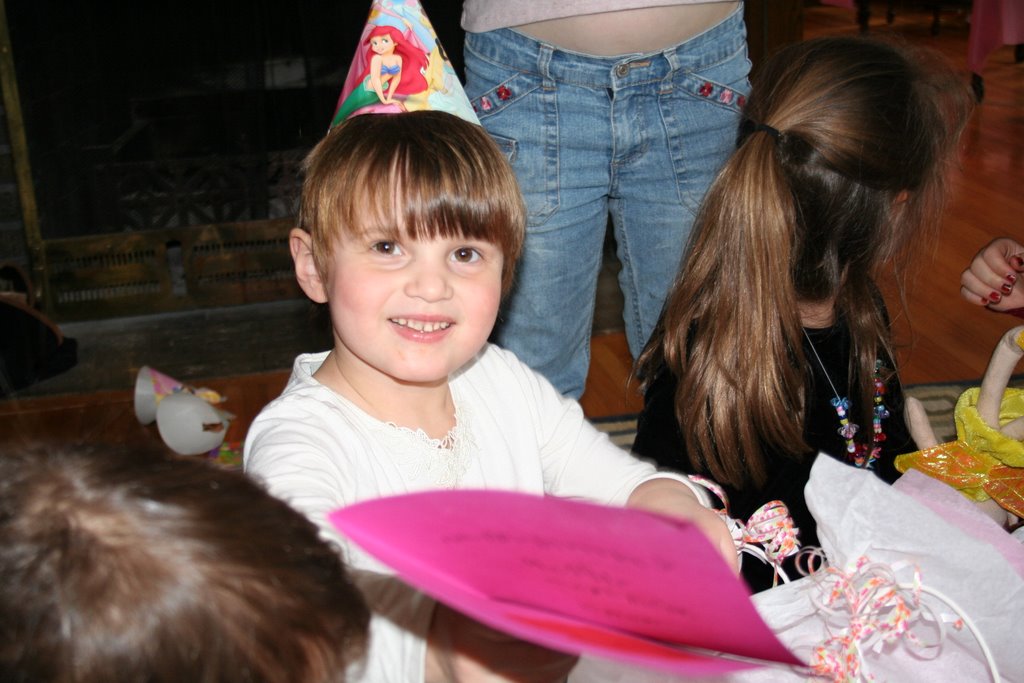
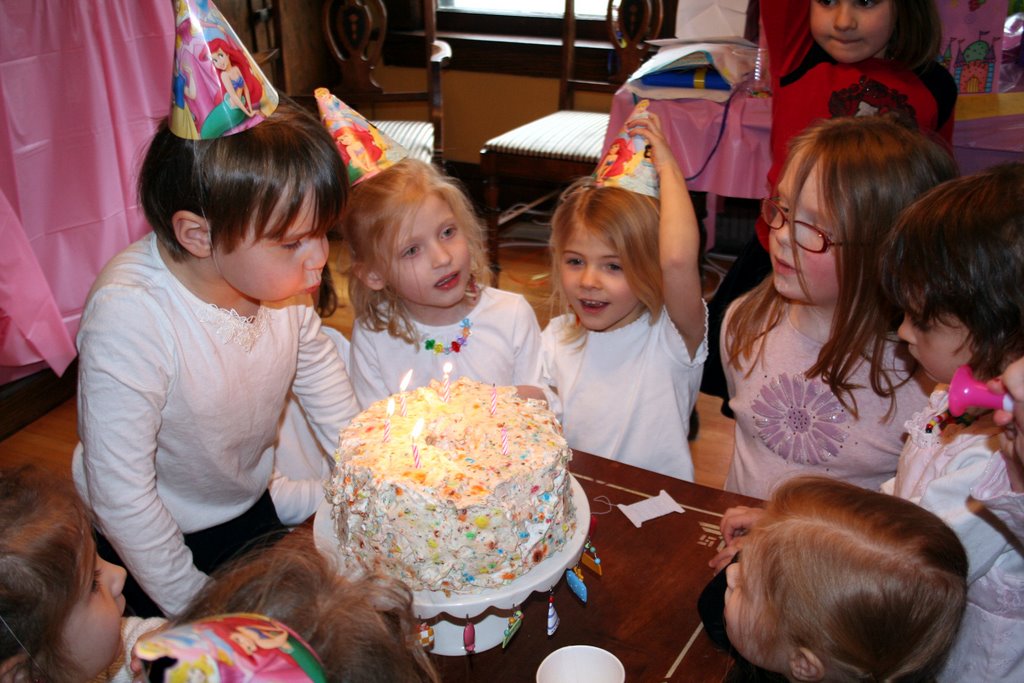
Introducing... The Six Year Old!